

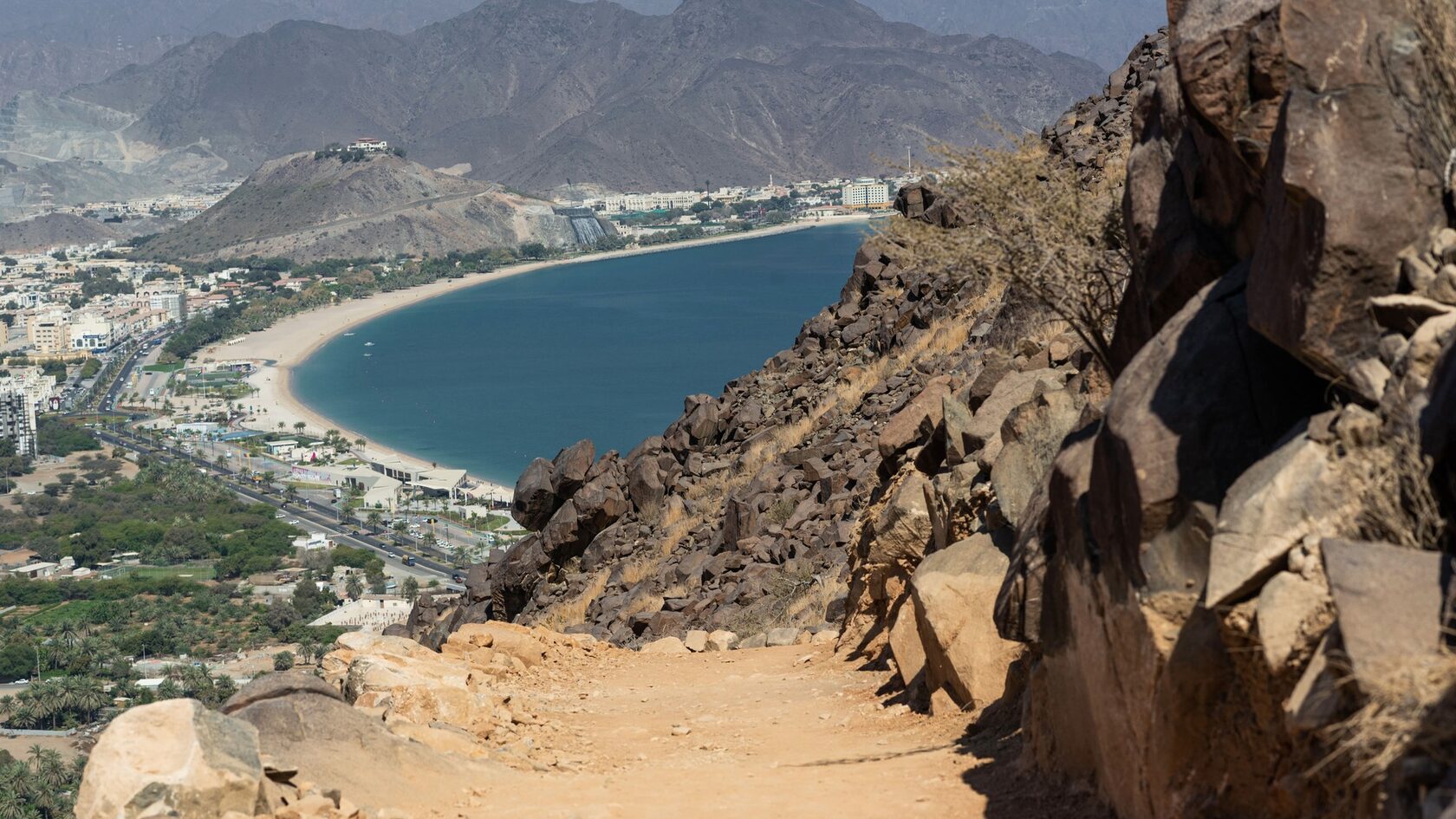
The city belongs to the emirate of Sharjah, yet it lies on the opposite side of the country, facing the Gulf of Oman rather than the Arabian Gulf. In practical terms, that makes it one of the UAE’s few true windows onto the open ocean — and the only major port on this coastline under Sharjah’s administration.
This geography has always mattered. Long before modern highways connected it to Dubai, Khorfakkan functioned as a natural harbour along historic trade routes linking the Indian Ocean with the Gulf. Its deep waters and sheltered bay made it a valuable stop for merchants moving between India, East Africa, and Arabia. Today, Port of Khorfakkan remains one of the region’s significant container ports, still positioned along major global shipping lanes — a continuation of a role it has played for centuries.
The town is framed by the rugged Hajar Mountains, which descend abruptly into the sea. This contrast — rock and water meeting without transition — gives the coastline a character that feels entirely different from the wide, sandy expanses of Dubai. The water itself is deeper, clearer, and more dynamic, shaped by its connection to the open ocean.
This geography has always mattered. Long before modern highways connected it to Dubai, Khorfakkan functioned as a natural harbour along historic trade routes linking the Indian Ocean with the Gulf. Its deep waters and sheltered bay made it a valuable stop for merchants moving between India, East Africa, and Arabia. Today, Port of Khorfakkan remains one of the region’s significant container ports, still positioned along major global shipping lanes — a continuation of a role it has played for centuries.
The town is framed by the rugged Hajar Mountains, which descend abruptly into the sea. This contrast — rock and water meeting without transition — gives the coastline a character that feels entirely different from the wide, sandy expanses of Dubai. The water itself is deeper, clearer, and more dynamic, shaped by its connection to the open ocean.
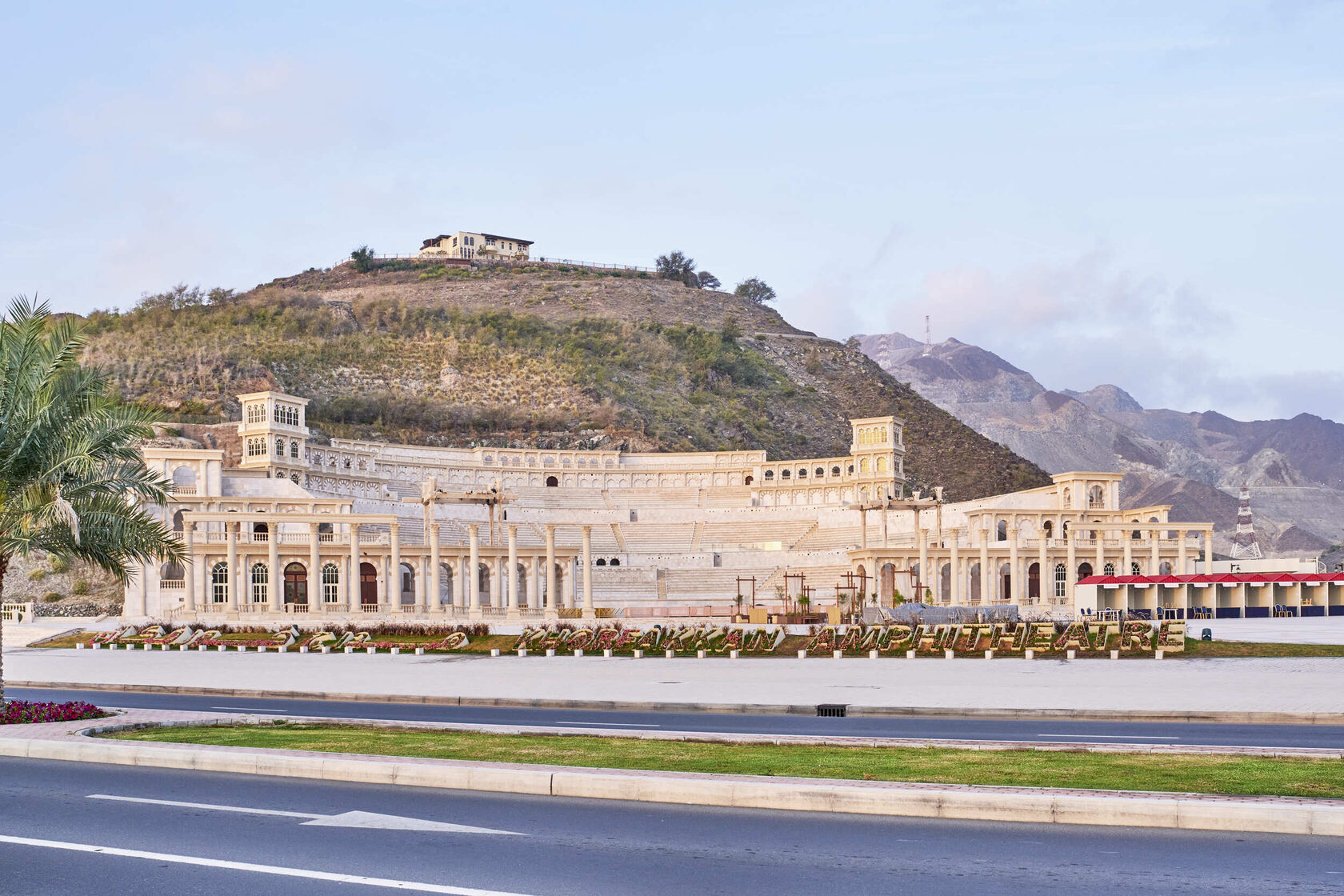
The recently developed Khorfakkan Amphitheatre has become the town’s most recognisable landmark, a large-scale structure set against the mountains overlooking the bay. Nearby, Al Rafisah Dam introduces a different atmosphere — still water, kayaking, and walking paths cutting through steep terrain. Along the coast, Khorfakkan Beach offers a long, accessible stretch of shoreline, where the mountains remain in constant view.
For residents of Dubai, the appeal lies precisely in this shift. The urban density gives way to desert, then to mountains, and finally to the sea. By the time you arrive — roughly 90 minutes to two hours, depending on the route — the rhythm has already changed.
For residents of Dubai, the appeal lies precisely in this shift. The urban density gives way to desert, then to mountains, and finally to the sea. By the time you arrive — roughly 90 minutes to two hours, depending on the route — the rhythm has already changed.
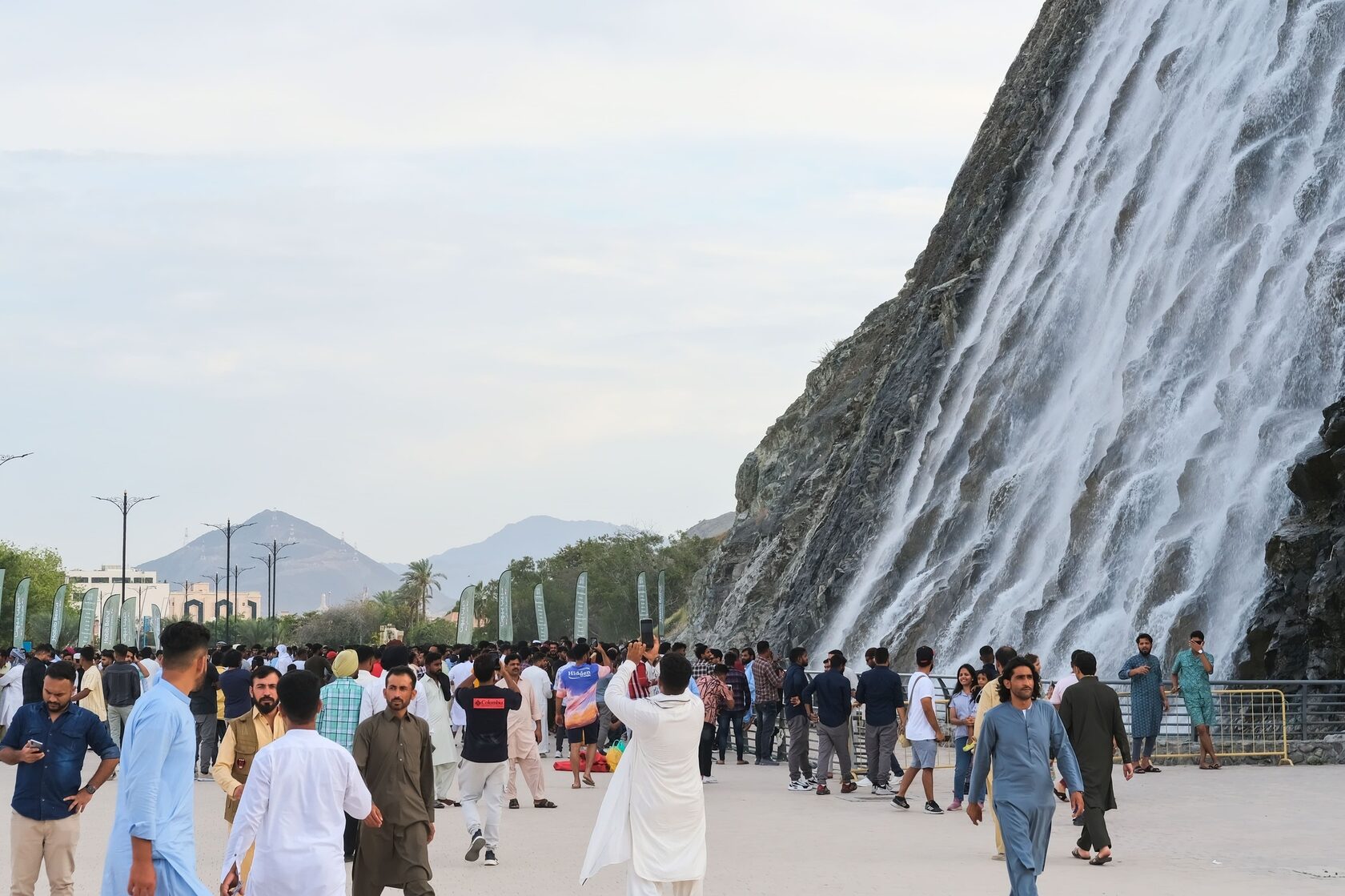
Khorfakkan does not try to compete with Dubai’s scale or pace. It offers something else: clarity. Fewer distractions, more space, and a landscape that feels less constructed. The town invites slower movement — walking along the corniche, swimming in deeper water, or simply sitting with the view.
That contrast is exactly why it matters. The UAE is often understood through its largest cities, but places like Khorfakkan reveal a different layer of the country — one shaped as much by geography as by development. It reminds you that beyond the skyline, there is another coastline entirely, facing a different sea and carrying a different history.
That contrast is exactly why it matters. The UAE is often understood through its largest cities, but places like Khorfakkan reveal a different layer of the country — one shaped as much by geography as by development. It reminds you that beyond the skyline, there is another coastline entirely, facing a different sea and carrying a different history.