

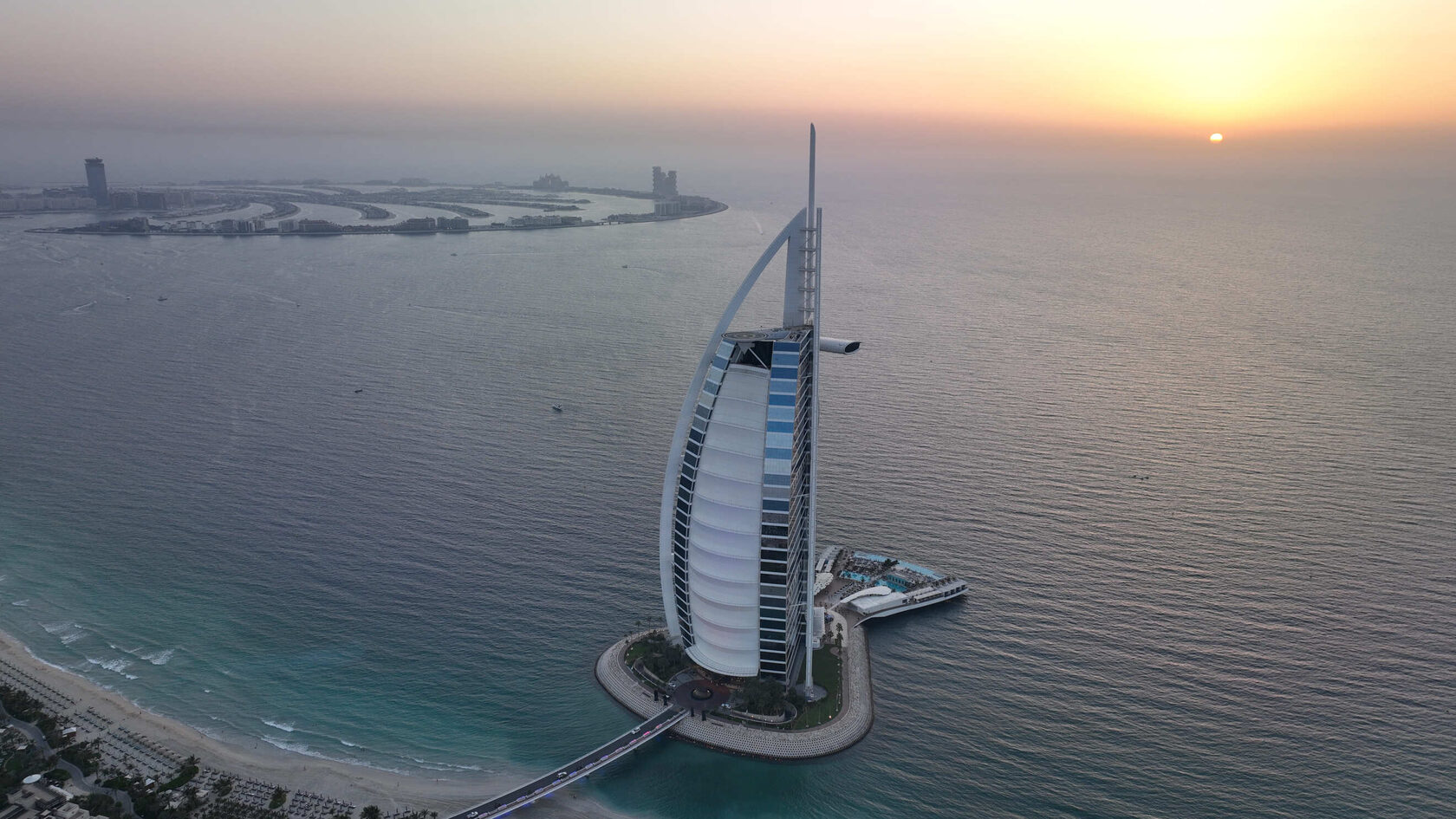
Dubai has several globally recognized landmarks, but only one that arrived before the city fully knew what it would become. Long before palm-shaped islands, supertall towers, or branded residences, there was a single, deliberate gesture placed out at sea. Burj Al Arab was a true pioneer, standing alone, visible from miles away, and insisting on attention.
When the hotel opened at the edge of Jumeirah in 1999, Dubai was still shaping its global voice. And Burj Al Arab gave it one. Not subtle, not modest, and certainly not safe. Its sail-like form was designed to travel instantly – on postcards, magazine covers, television screens. You didn’t need to know the city to recognize the image. In many ways, it became the first international shorthand for Dubai itself.
What made it powerful was how clearly it announced intent – hospitality as statement. Space was treated as luxury in its own right. Suites began where other hotels ended. Service was overwhelming, precise, and deeply personal. The now-famous “seven-star” label was never official, but it stuck because language ran out. Five stars felt insufficient to describe what was essentially a performance of excess. And yet, decades later, the question remains valid: why do people still want to stay there?
When the hotel opened at the edge of Jumeirah in 1999, Dubai was still shaping its global voice. And Burj Al Arab gave it one. Not subtle, not modest, and certainly not safe. Its sail-like form was designed to travel instantly – on postcards, magazine covers, television screens. You didn’t need to know the city to recognize the image. In many ways, it became the first international shorthand for Dubai itself.
What made it powerful was how clearly it announced intent – hospitality as statement. Space was treated as luxury in its own right. Suites began where other hotels ended. Service was overwhelming, precise, and deeply personal. The now-famous “seven-star” label was never official, but it stuck because language ran out. Five stars felt insufficient to describe what was essentially a performance of excess. And yet, decades later, the question remains valid: why do people still want to stay there?
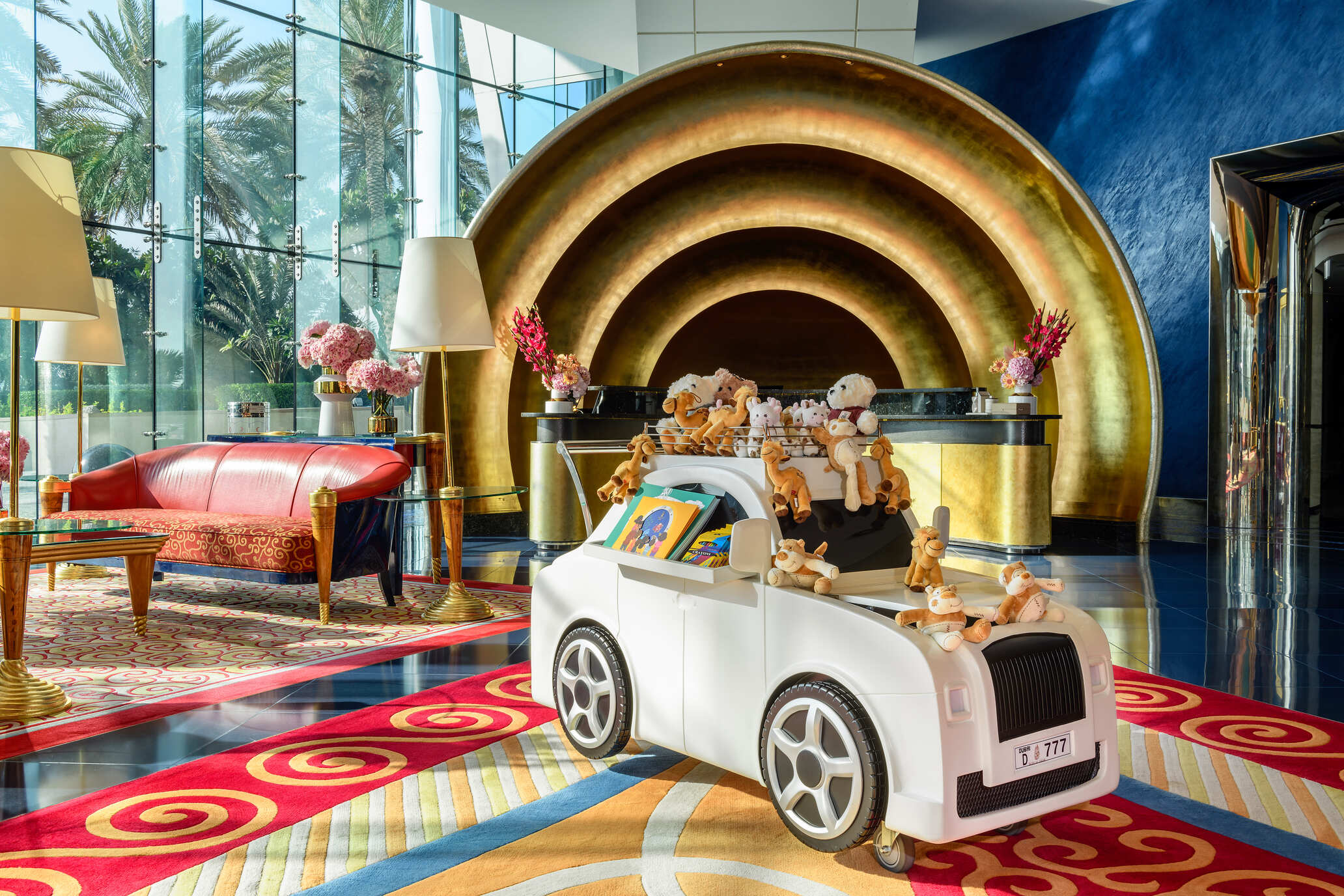
Part of the answer lies in rarity. Burj Al Arab has never been replicated, franchised, or diluted. While Dubai’s hotel scene expanded in every direction – sleeker, taller, trendier – the Burj stayed exactly where it was, doing exactly what it always did. It waited for guests who wanted a very specific experience: a piece of the city’s identity.
It’s a place where excess is unapologetic, where service is formal, where privacy is absolute, and where the view still feels improbable. For many guests, especially repeat visitors to Dubai, it offers contrast to the ever-changing city simply by being reassuringly certain of what it is. It also represents a particular moment in the UAE’s story – a time when ambition was bold and singular. Today’s Dubai expresses confidence through masterplans, districts, and ecosystems. Back then, it did so through one object, placed deliberately in the sea.
It’s a place where excess is unapologetic, where service is formal, where privacy is absolute, and where the view still feels improbable. For many guests, especially repeat visitors to Dubai, it offers contrast to the ever-changing city simply by being reassuringly certain of what it is. It also represents a particular moment in the UAE’s story – a time when ambition was bold and singular. Today’s Dubai expresses confidence through masterplans, districts, and ecosystems. Back then, it did so through one object, placed deliberately in the sea.
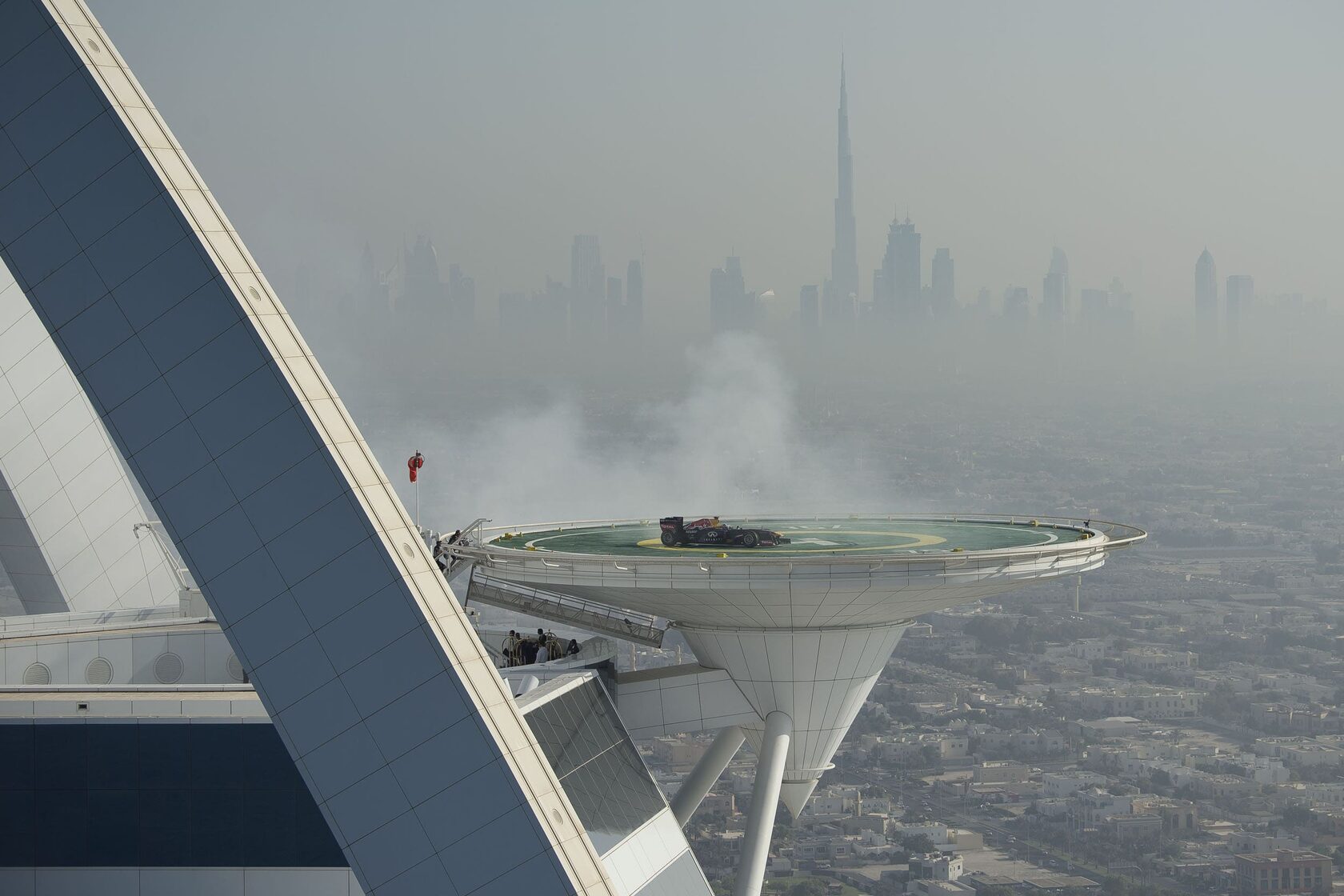
Burj Al Arab no longer needs to convince anyone. It doesn’t compete on price, trend, or novelty. It operates on memory, symbolism, and continuity. For first-time visitors, it’s a pilgrimage. For others, it’s a return. Either way, the reason people still book those suites is simple: you’re staying inside the moment Dubai decided to be unforgettable.