

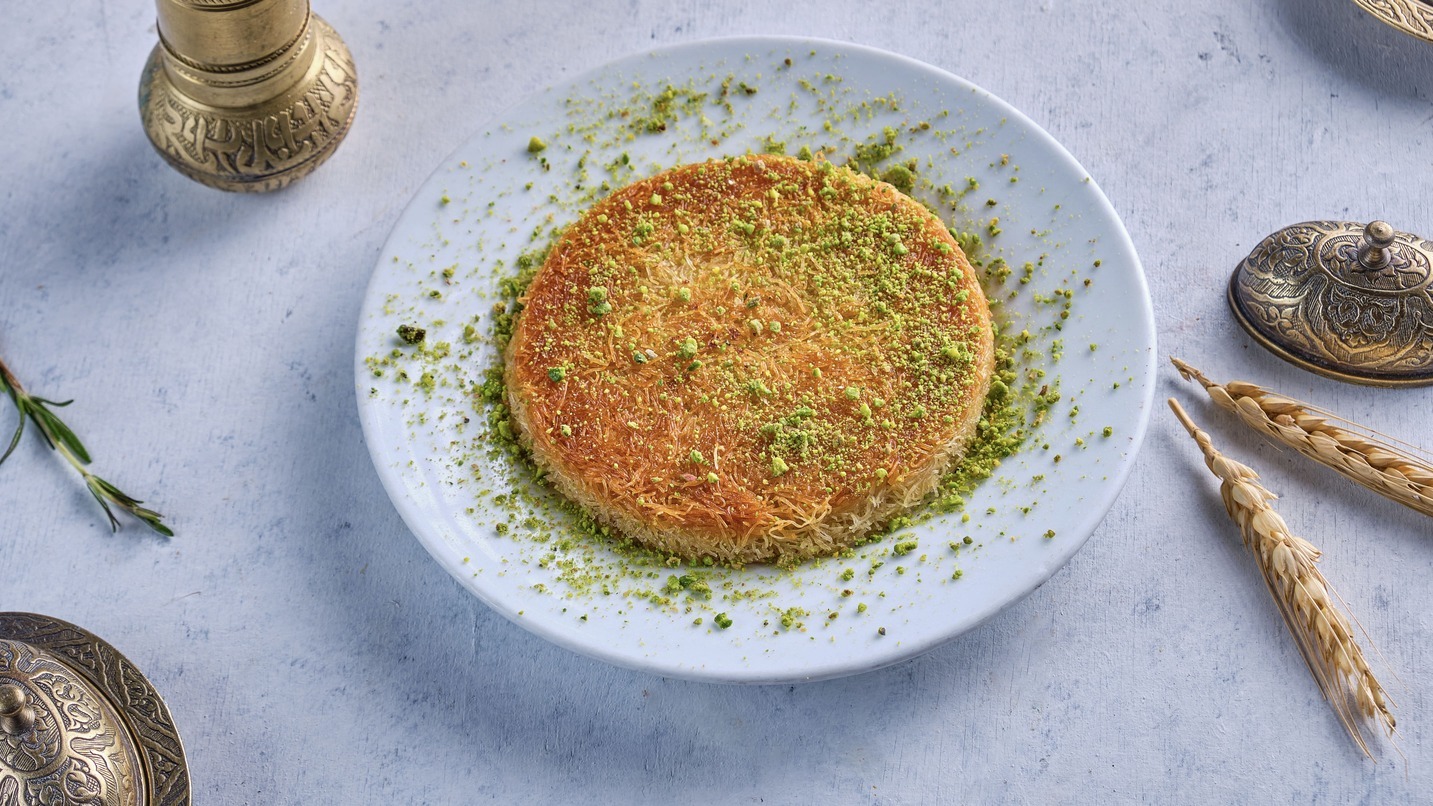
There are desserts you eat, and there are desserts you inherit. Kunafa belongs firmly in the second category. Long before it became a trending flavour or a chocolate filling, it was a ritual. A tray brought to the table still warm, the syrup settling into crisp threads of pastry, the knife cutting through with a soft resistance. It may be made of sugar and cheese, but it is also about ceremony, generosity, and shared tables.
Kunafa traces its roots to the Levant – Palestine, Jordan, Lebanon, and Syria – though it is equally at home in Egypt and Turkey, and throughout the wider Middle East. It exists in many variations, but the structure remains constant: shredded pastry known as kataifi or kadayif layered with soft cheese or cream, baked until golden, then soaked in fragrant syrup scented with rose or orange blossom. It is often finished with a scattering of crushed pistachios, adding colour, texture, and a subtle nuttiness. Texture is everything. Crisp on top, soft beneath. Sweet, but anchored by salt and richness.
Traditionally, it is served hot. The cheese stretches slightly, the syrup glistens, and the top shatters gently under a fork. It appears at weddings, during Ramadan evenings, and at gatherings where food is less about indulgence and more about presence. Kunafa is rarely plated individually. It is cut and shared.
Kunafa traces its roots to the Levant – Palestine, Jordan, Lebanon, and Syria – though it is equally at home in Egypt and Turkey, and throughout the wider Middle East. It exists in many variations, but the structure remains constant: shredded pastry known as kataifi or kadayif layered with soft cheese or cream, baked until golden, then soaked in fragrant syrup scented with rose or orange blossom. It is often finished with a scattering of crushed pistachios, adding colour, texture, and a subtle nuttiness. Texture is everything. Crisp on top, soft beneath. Sweet, but anchored by salt and richness.
Traditionally, it is served hot. The cheese stretches slightly, the syrup glistens, and the top shatters gently under a fork. It appears at weddings, during Ramadan evenings, and at gatherings where food is less about indulgence and more about presence. Kunafa is rarely plated individually. It is cut and shared.
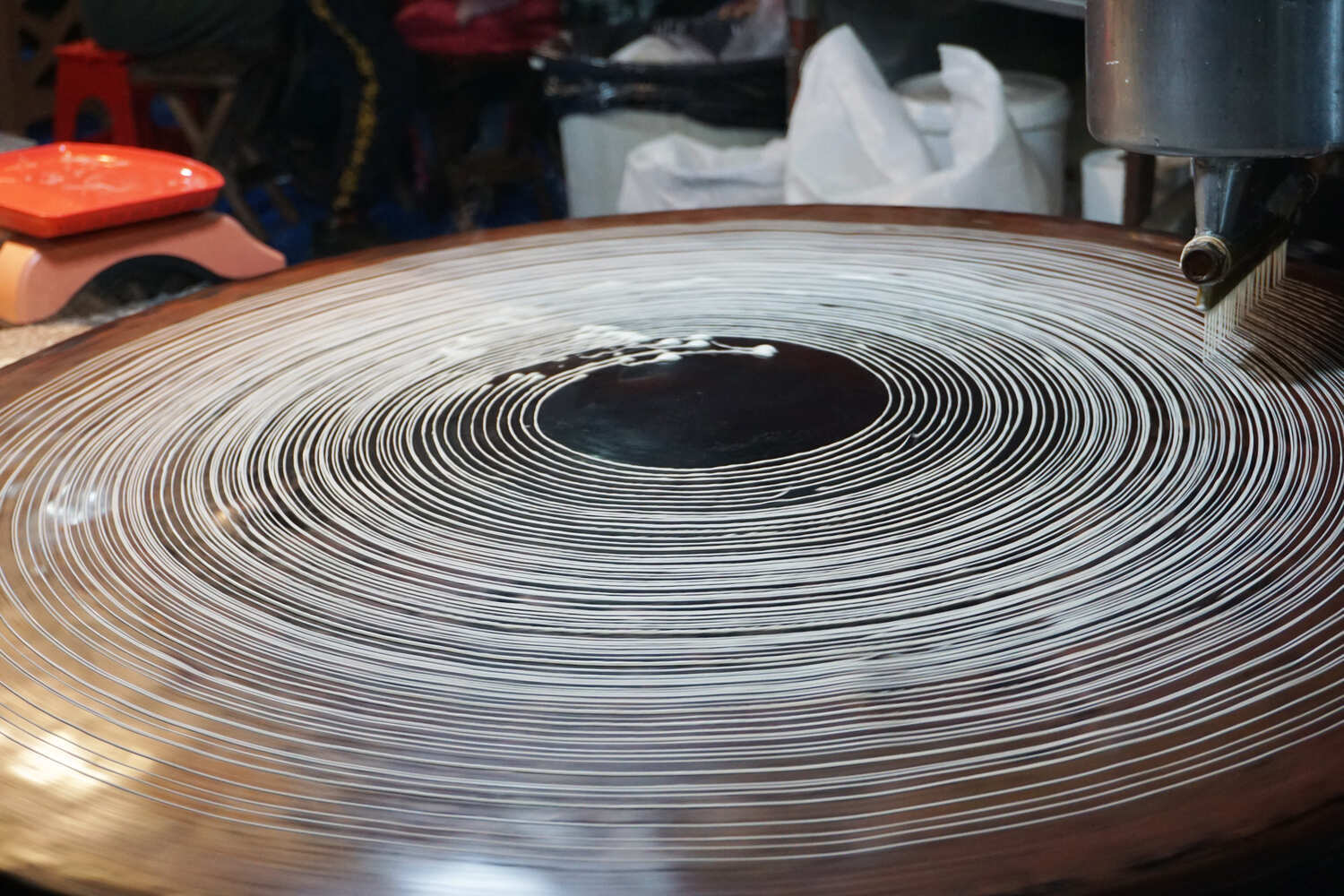
Kunafa has survived for centuries not because it remained static or rigid. The recipes are numerous, and the variations inventive. So when, in 2021, this deeply rooted dessert took on an unexpected form and went viral online, it wasn’t entirely a shock.
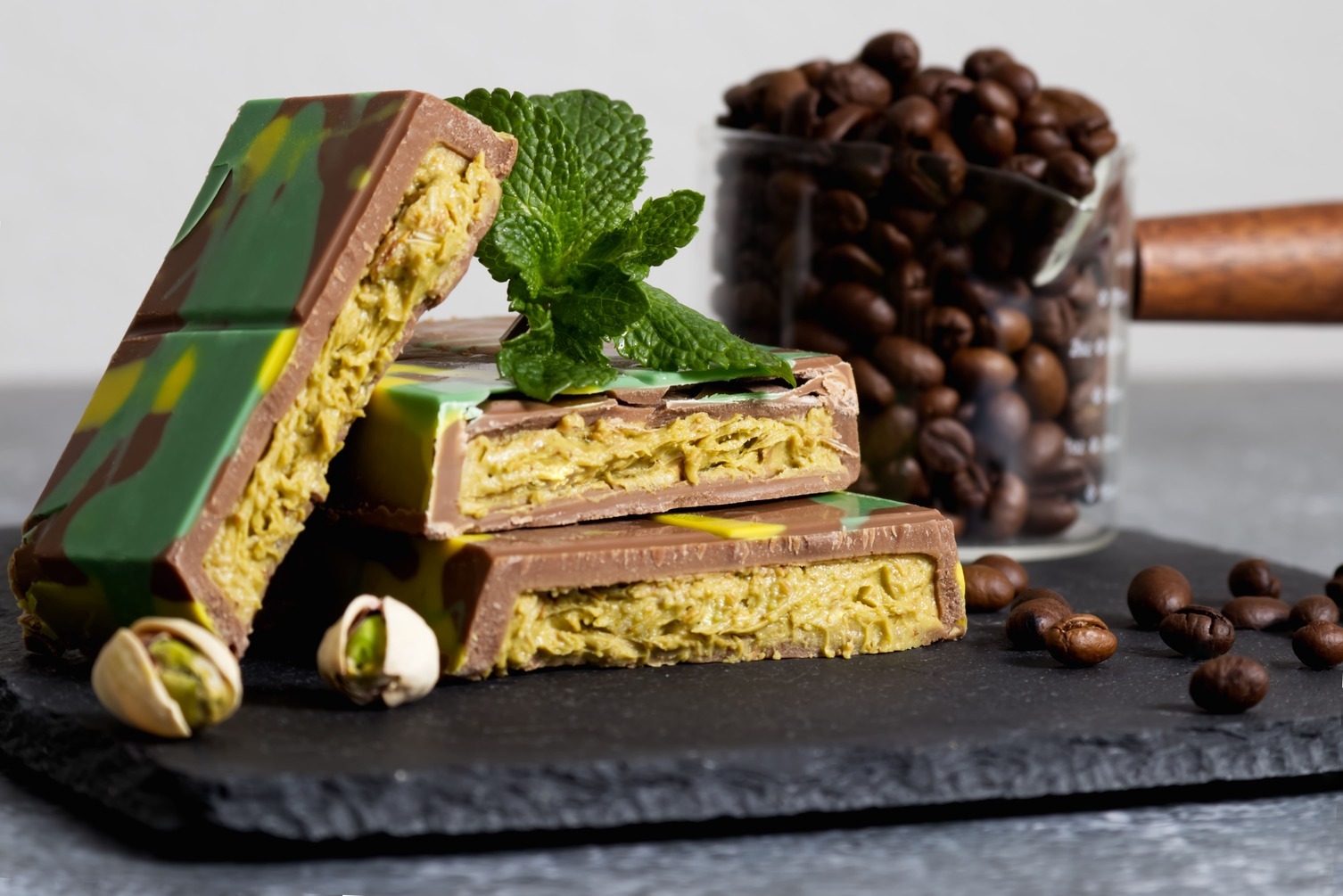
A Dubai-based chocolatier, Fix, introduced a pistachio-and-kunafa-filled chocolate bar. Inside smooth milk chocolate sat the familiar crunch of kataifi and the richness of pistachio cream – recognisably regional, but entirely recontextualised. What began as a boutique creation quickly found an audience online. Images travelled. Demand followed. The “Dubai chocolate” bar became a global phenomenon and a shorthand for indulgence.
The most interesting part of this reinvention is its structure. Strip away the chocolate shell and the essence remains the same: crisp pastry, nuts, sweetness, balance. The format changed; the flavour memory did not. It is still kunafa at heart, just rewrapped.
A Dubai-based chocolatier, Fix, introduced a pistachio-and-kunafa-filled chocolate bar. Inside smooth milk chocolate sat the familiar crunch of kataifi and the richness of pistachio cream – recognisably regional, but entirely recontextualised. What began as a boutique creation quickly found an audience online. Images travelled. Demand followed. The “Dubai chocolate” bar became a global phenomenon and a shorthand for indulgence.
The most interesting part of this reinvention is its structure. Strip away the chocolate shell and the essence remains the same: crisp pastry, nuts, sweetness, balance. The format changed; the flavour memory did not. It is still kunafa at heart, just rewrapped.
Today, versions of the bar appear far beyond its original maker. Supermarkets, cafés, airport duty-free shops – the combination is difficult to miss. What started as a niche product has become a category. This, too, feels distinctly Dubai: take something traditional, engineer it for a global audience, and let it circulate.
For some, especially in the West, the chocolate version is a novelty. For others, it is a bridge – a way to introduce a regional dessert to those unfamiliar with it. It does not replace the tray passed across a family table, still warm from the oven. But it proves something else: tradition can travel. It can adapt without disappearing.
For some, especially in the West, the chocolate version is a novelty. For others, it is a bridge – a way to introduce a regional dessert to those unfamiliar with it. It does not replace the tray passed across a family table, still warm from the oven. But it proves something else: tradition can travel. It can adapt without disappearing.