

The UAE does a good job of confusing anyone who thinks they understand deserts. Drive inland and there are dunes stretching to the horizon. Drive towards the mountains and suddenly there are wadis and rocky peaks. Then head to the coast, get into a kayak, and within minutes you can find yourself paddling between trees growing directly out of salt water. Those trees are mangroves, and they are one of the more surprising parts of the UAE landscape.
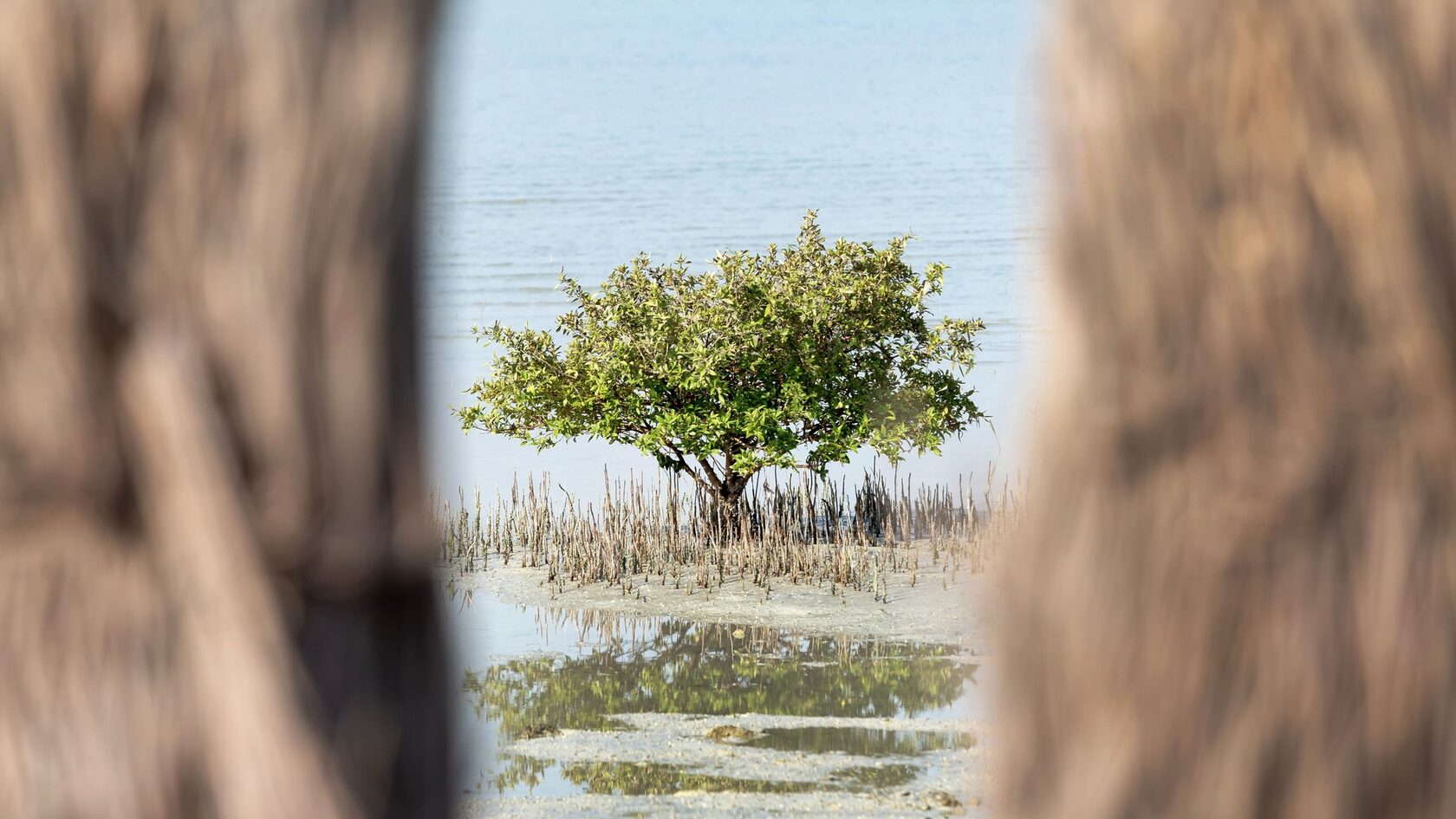
First, a little biology. A mangrove is not one particular tree but a group of trees and shrubs adapted to living along warm, salty coastlines where most plants would struggle. In the UAE, the dominant — and naturally occurring — species is the grey mangrove, Avicennia marina, known locally as gurm. It tolerates extreme salinity, heat, tidal flooding and muddy soil with very little oxygen. In other words, it has somehow found a way to enjoy conditions that sound unpleasant even by August-in-Dubai standards.
Mangroves do not really care how much rain falls on the dunes behind them. What matters is the coast. The UAE has long stretches of shallow, warm, sheltered water, tidal lagoons and mudflats — exactly the environments in which mangroves can establish themselves. Their roots deal with salt, tides bring nutrients, and the Gulf provides the water. Desert on one side, marine forest on the other is not a contradiction at all. It is simply two ecosystems meeting.
First, a little biology. A mangrove is not one particular tree but a group of trees and shrubs adapted to living along warm, salty coastlines where most plants would struggle. In the UAE, the dominant — and naturally occurring — species is the grey mangrove, Avicennia marina, known locally as gurm. It tolerates extreme salinity, heat, tidal flooding and muddy soil with very little oxygen. In other words, it has somehow found a way to enjoy conditions that sound unpleasant even by August-in-Dubai standards.
Mangroves do not really care how much rain falls on the dunes behind them. What matters is the coast. The UAE has long stretches of shallow, warm, sheltered water, tidal lagoons and mudflats — exactly the environments in which mangroves can establish themselves. Their roots deal with salt, tides bring nutrients, and the Gulf provides the water. Desert on one side, marine forest on the other is not a contradiction at all. It is simply two ecosystems meeting.
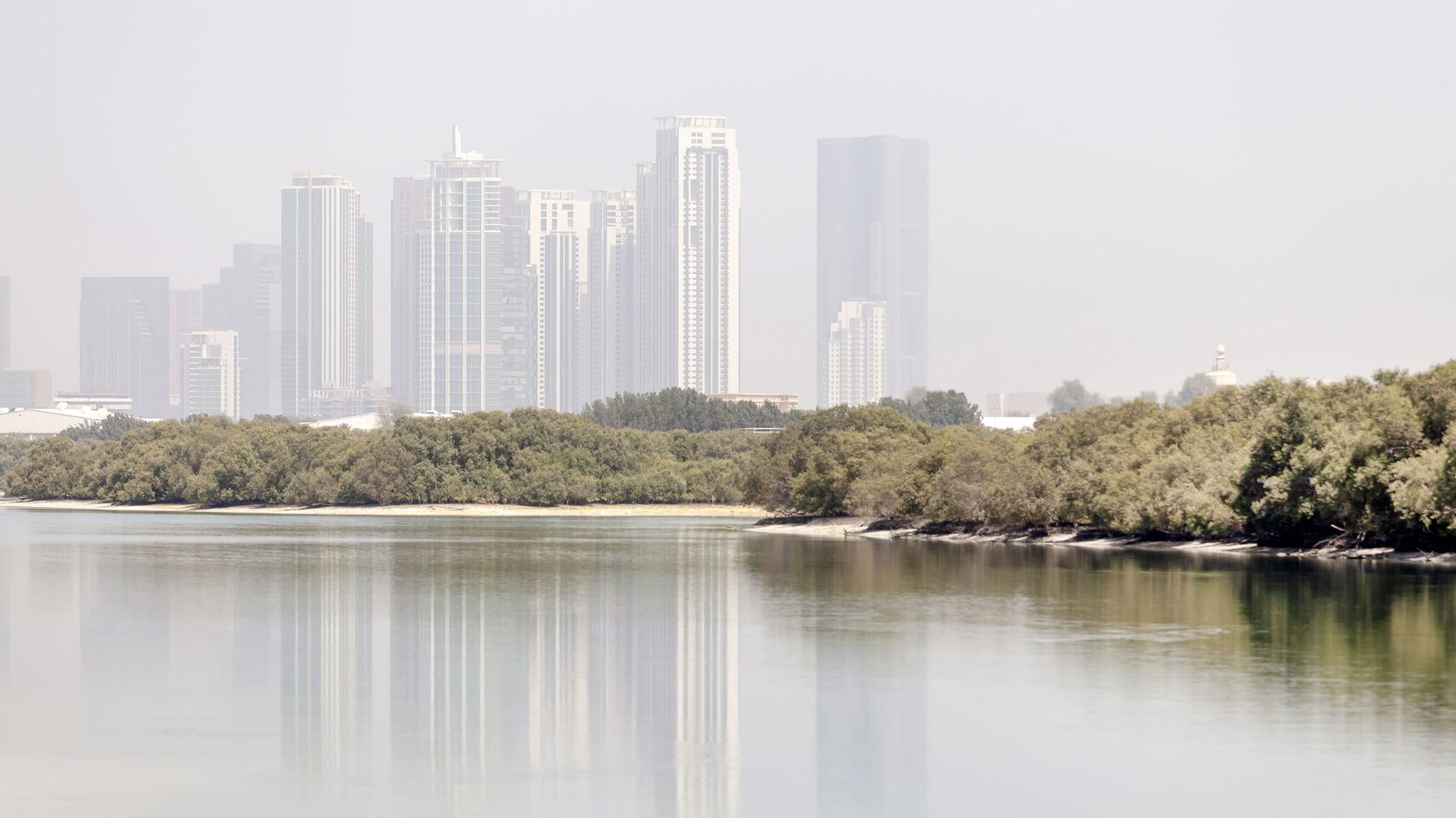
Abu Dhabi is where the scale becomes most obvious. The emirate has an estimated 70 square kilometres of mangrove forest, with more than 19 square kilometres inside Mangrove National Park alone. From the city, you can kayak through the Eastern Mangroves and find yourself surrounded by tangled roots, herons, fish and crabs while apartment towers remain visible in the distance. Mangrove National Park is protected by the Environment Agency – Abu Dhabi and supports more than 60 bird species alongside turtles and numerous marine animals.
For something even easier to explore, there is Jubail Mangrove Park. Here, raised wooden boardwalks run directly through the mangroves, making it possible to experience the ecosystem without getting into a kayak at all. The water beneath can look almost impossibly clear on the right day, with fish moving between the roots and birds standing in the shallows.
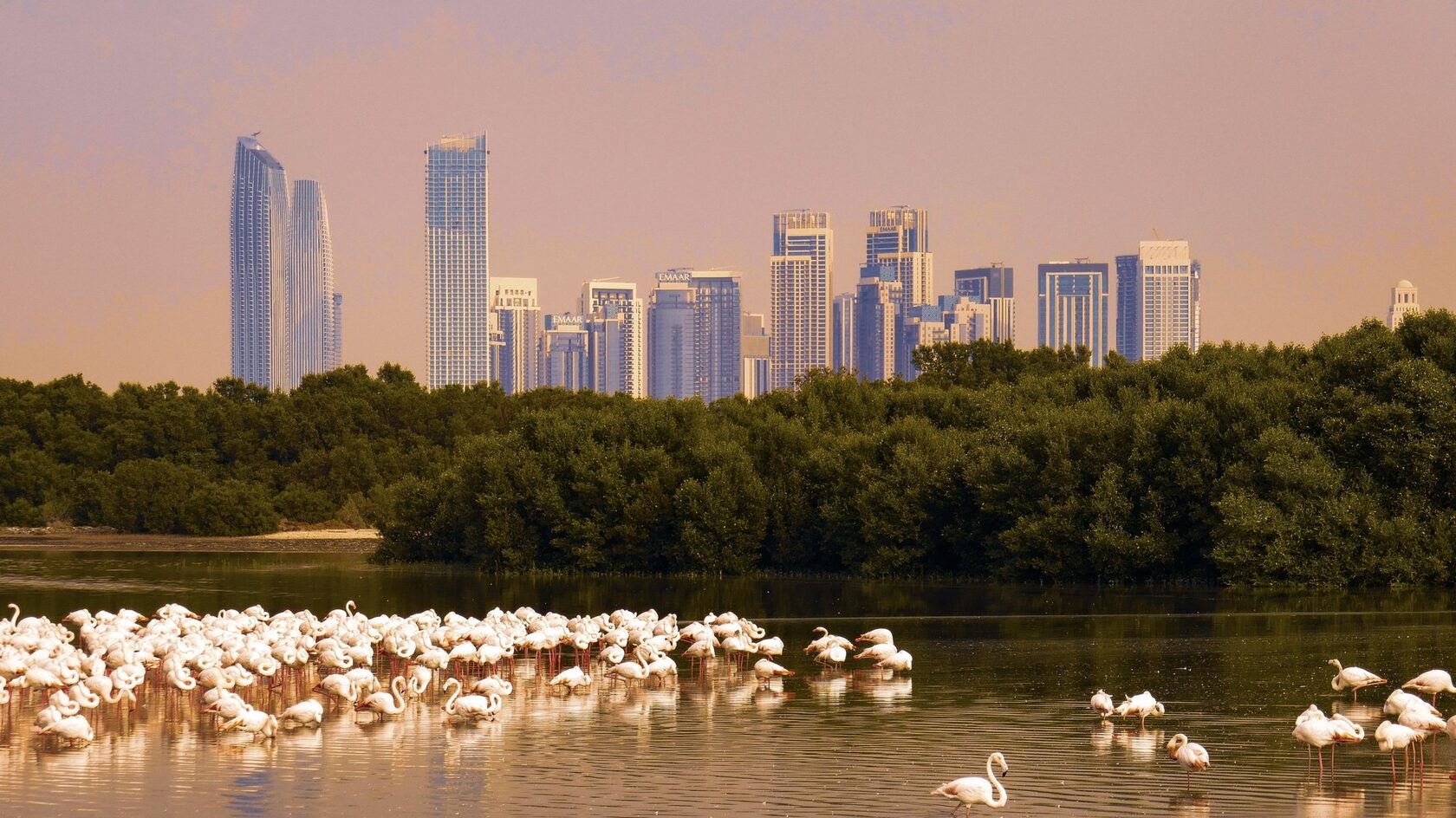
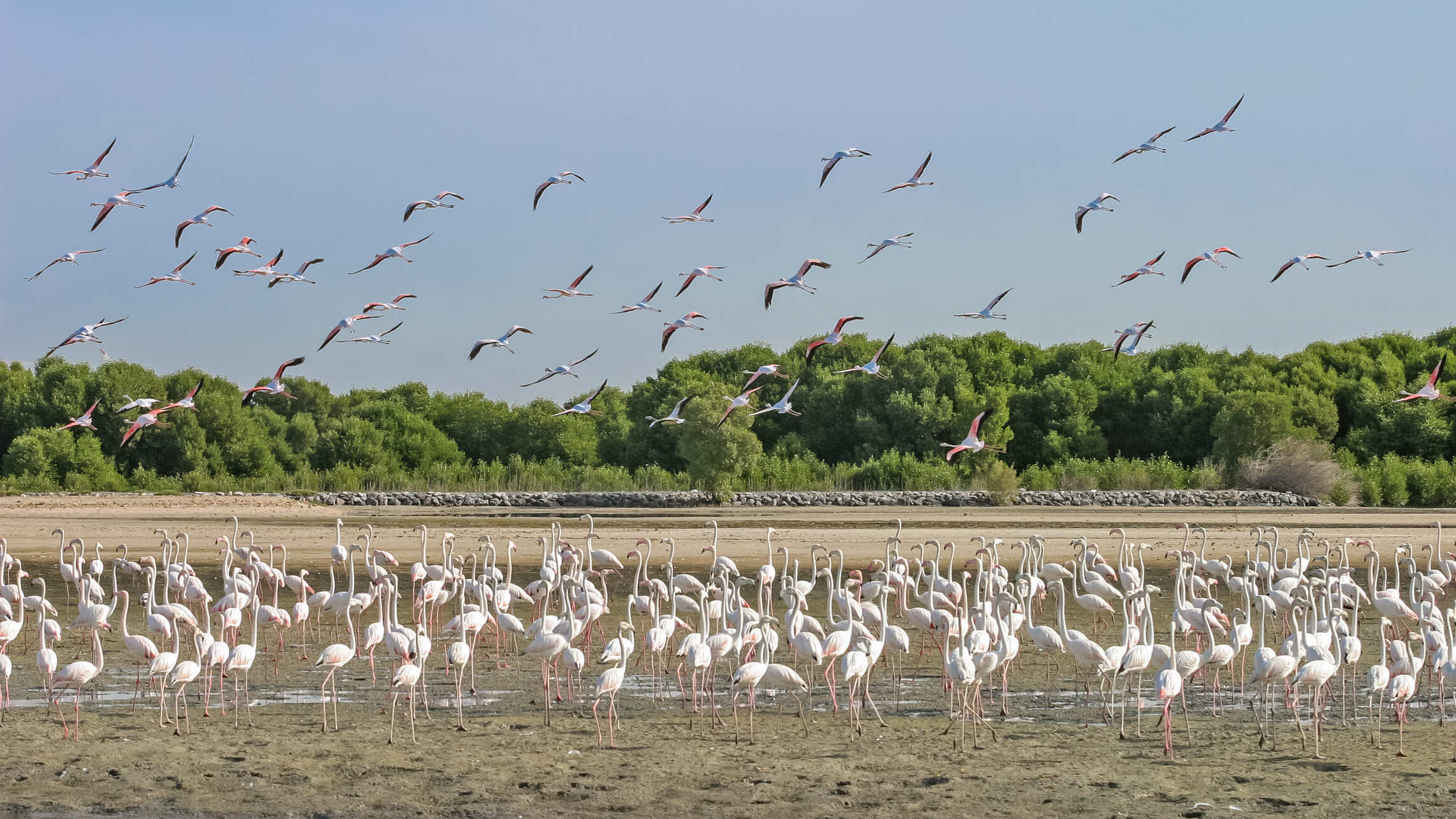
Dubai has its own version, although it feels very different. Ras Al Khor Wildlife Sanctuary sits almost absurdly close to the city centre. It covers just over 10 square kilometres of wetlands, including mangroves, mudflats, salt flats and tidal areas. In winter, as many as 25,000 birds can gather there, with flamingos providing the celebrity presence. Dubai Municipality says mangroves are the sanctuary’s dominant ecosystem, and 45,000 seedlings were planted there between 1991 and 1994. The contrast is probably the best part. You can stand looking at flamingos feeding among wetlands and mangroves while the skyline rises behind them. Few places compress the UAE’s two personalities quite so efficiently.
For something even easier to explore, there is Jubail Mangrove Park. Here, raised wooden boardwalks run directly through the mangroves, making it possible to experience the ecosystem without getting into a kayak at all. The water beneath can look almost impossibly clear on the right day, with fish moving between the roots and birds standing in the shallows.
Dubai has its own version, although it feels very different. Ras Al Khor Wildlife Sanctuary sits almost absurdly close to the city centre. It covers just over 10 square kilometres of wetlands, including mangroves, mudflats, salt flats and tidal areas. In winter, as many as 25,000 birds can gather there, with flamingos providing the celebrity presence. Dubai Municipality says mangroves are the sanctuary’s dominant ecosystem, and 45,000 seedlings were planted there between 1991 and 1994. The contrast is probably the best part. You can stand looking at flamingos feeding among wetlands and mangroves while the skyline rises behind them. Few places compress the UAE’s two personalities quite so efficiently.
Then there is Umm Al Quwain, which may offer the most convincing escape of all. The emirate has more than seven kilometres of mangroves, with lagoons and islands creating long channels that are particularly good for kayaking. Around Khor Al Beidah and Al Sinniyah Island, the UAE suddenly feels remarkably undeveloped: shallow water, birds, sandbanks and mangroves, with relatively little city getting in the way.
Ajman deserves a place on the list too. Al Zorah Nature Reserve contains around one million square metres of natural mangrove forest, mixed with lagoons and sandy shoreline. Nearly 60 bird species have been recorded there, including flamingos, egrets and herons. The channels are calm enough that kayaking is accessible even if your paddling technique consists mainly of trying not to rotate in circles.
And yes, mangroves can smell. This is perhaps worth mentioning before selling the experience as some kind of Arabian Amazon. Mangrove forests are tidal wetlands. Their muddy sediments contain enormous amounts of decomposing organic material, and at low tide that can produce a distinctly earthy, sulphurous smell. There are exposed roots. There is mud. There are insects. The water level changes dramatically with the tide. Nature has made very little effort to prepare the place for Instagram.
Ajman deserves a place on the list too. Al Zorah Nature Reserve contains around one million square metres of natural mangrove forest, mixed with lagoons and sandy shoreline. Nearly 60 bird species have been recorded there, including flamingos, egrets and herons. The channels are calm enough that kayaking is accessible even if your paddling technique consists mainly of trying not to rotate in circles.
And yes, mangroves can smell. This is perhaps worth mentioning before selling the experience as some kind of Arabian Amazon. Mangrove forests are tidal wetlands. Their muddy sediments contain enormous amounts of decomposing organic material, and at low tide that can produce a distinctly earthy, sulphurous smell. There are exposed roots. There is mud. There are insects. The water level changes dramatically with the tide. Nature has made very little effort to prepare the place for Instagram.
Mangroves are working ecosystems. Their complicated root systems become nurseries for young fish, prawns, crabs and other marine life. They trap sediment, filter water and help protect coastlines from waves and erosion. They are also unusually effective carbon stores. Their importance is growing. Abu Dhabi has invested heavily in mangrove restoration and research, while the UAE government has developed national guidelines intended to make restoration more scientifically rigorous.
Still, you don’t need to care about carbon sequestration to enjoy them. Go early on a winter morning. Take a kayak in Umm Al Quwain or Ajman. Walk the boardwalk at Jubail Island. Watch flamingos at Ras Al Khor. Wait for the tide to rise and notice how completely the landscape changes around you. This is a slightly muddy, occasionally smelly, and surprisingly beautiful reminder that the UAE has always been much wilder than its postcards suggest.
Still, you don’t need to care about carbon sequestration to enjoy them. Go early on a winter morning. Take a kayak in Umm Al Quwain or Ajman. Walk the boardwalk at Jubail Island. Watch flamingos at Ras Al Khor. Wait for the tide to rise and notice how completely the landscape changes around you. This is a slightly muddy, occasionally smelly, and surprisingly beautiful reminder that the UAE has always been much wilder than its postcards suggest.