

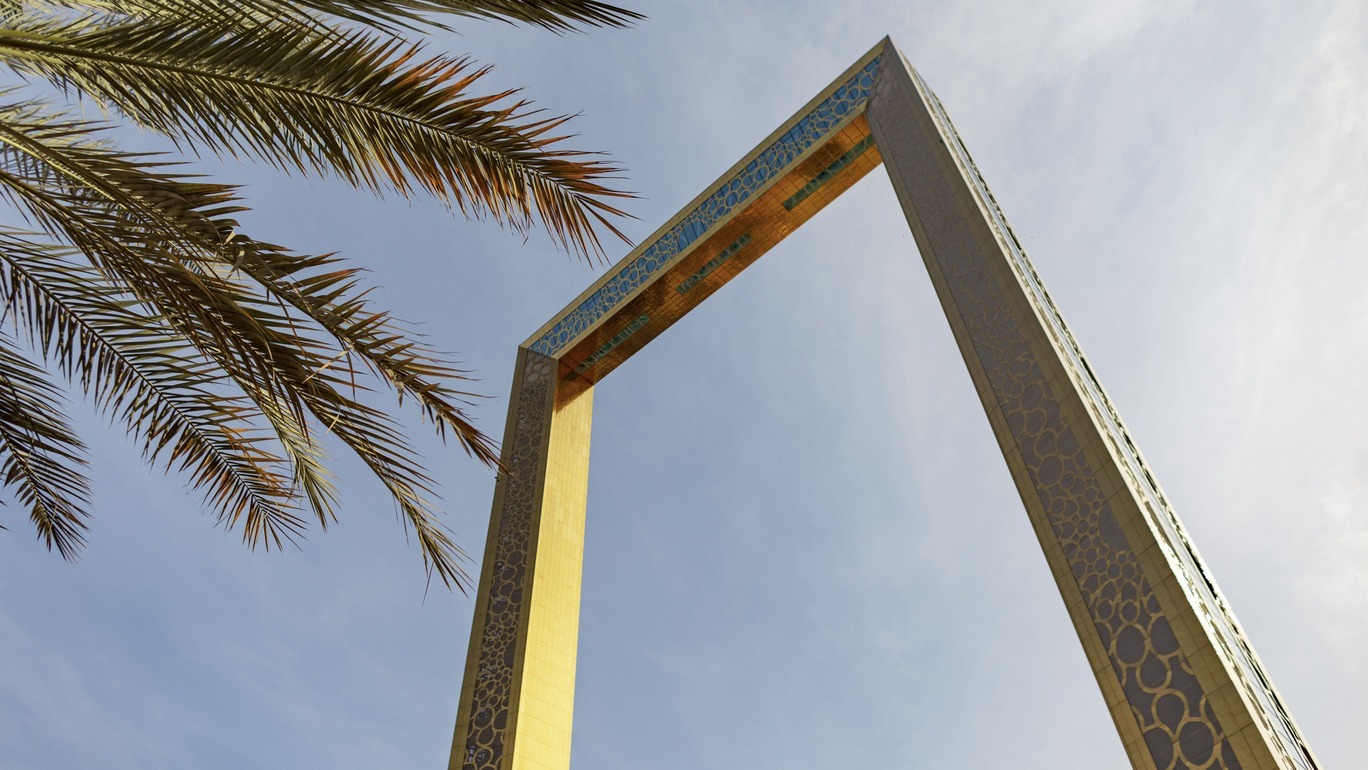
It’s clearly one of those projects that could only belong to the UAE, yet somehow avoids the usual shortcuts to spectacle. It doesn’t try to outshine the skyline it sits beside. Instead, it does something far more self-aware.
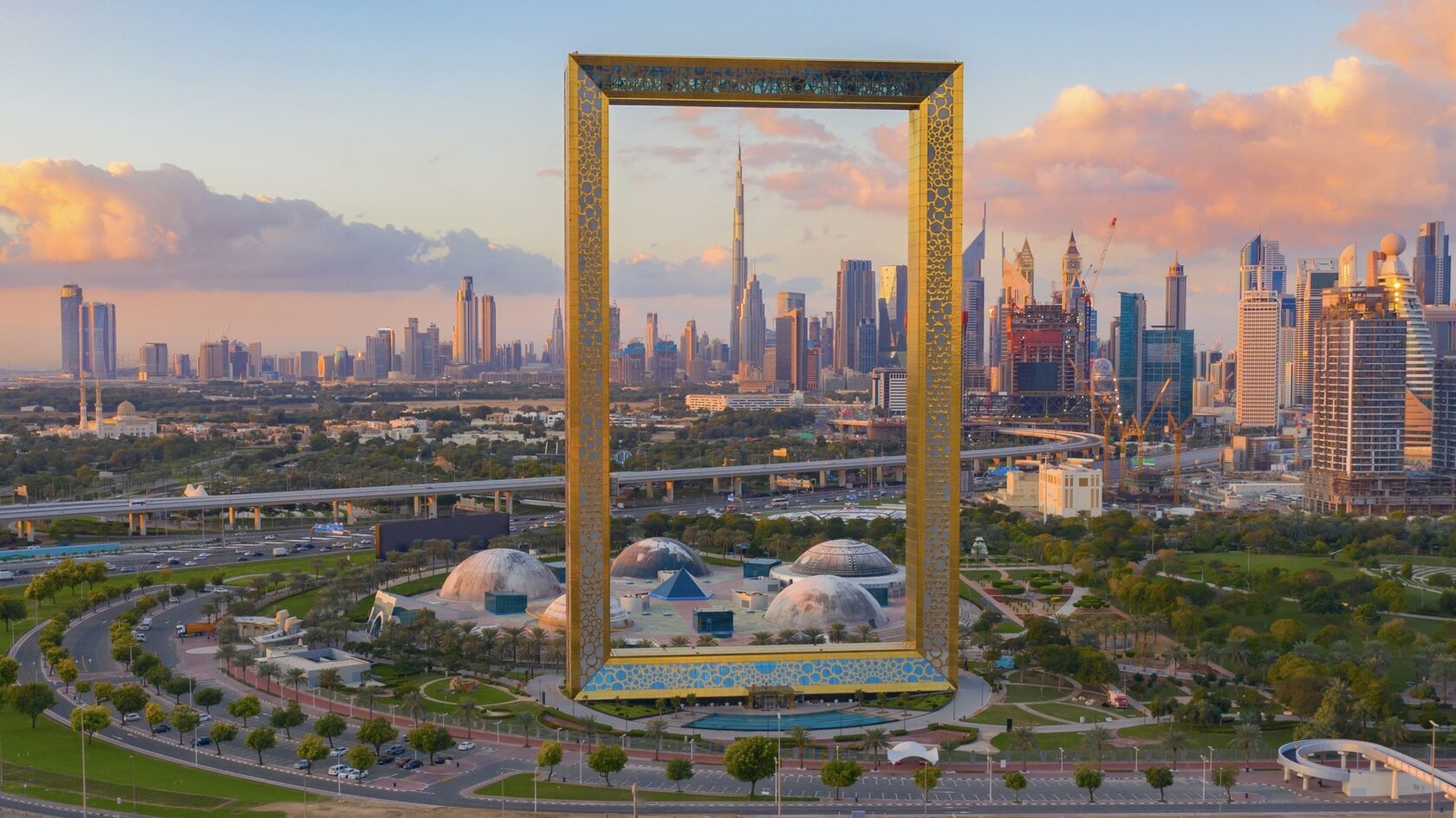
The idea behind the Frame is almost disarmingly simple. Not a tower, not a monument to speed or scale, but a structure designed to hold a view. A literal frame, positioned so that two very different Dubais sit opposite one another. One side looks toward Deira and the Creek, where the city’s commercial beginnings still shape daily life – lower buildings and tighter streets that recall the trading port Dubai once was. The other opens toward the contemporary city, where glass towers, highways, and vertical ambition define the view.
There is confidence in not needing to choose. Old and new are not placed in opposition, nor is one romanticized at the expense of the other. They are simply acknowledged as parts of the same continuum. Dubai Frame becomes a pause between them – a moment where progress is visible precisely because history remains in view.
The idea behind the Frame is almost disarmingly simple. Not a tower, not a monument to speed or scale, but a structure designed to hold a view. A literal frame, positioned so that two very different Dubais sit opposite one another. One side looks toward Deira and the Creek, where the city’s commercial beginnings still shape daily life – lower buildings and tighter streets that recall the trading port Dubai once was. The other opens toward the contemporary city, where glass towers, highways, and vertical ambition define the view.
There is confidence in not needing to choose. Old and new are not placed in opposition, nor is one romanticized at the expense of the other. They are simply acknowledged as parts of the same continuum. Dubai Frame becomes a pause between them – a moment where progress is visible precisely because history remains in view.
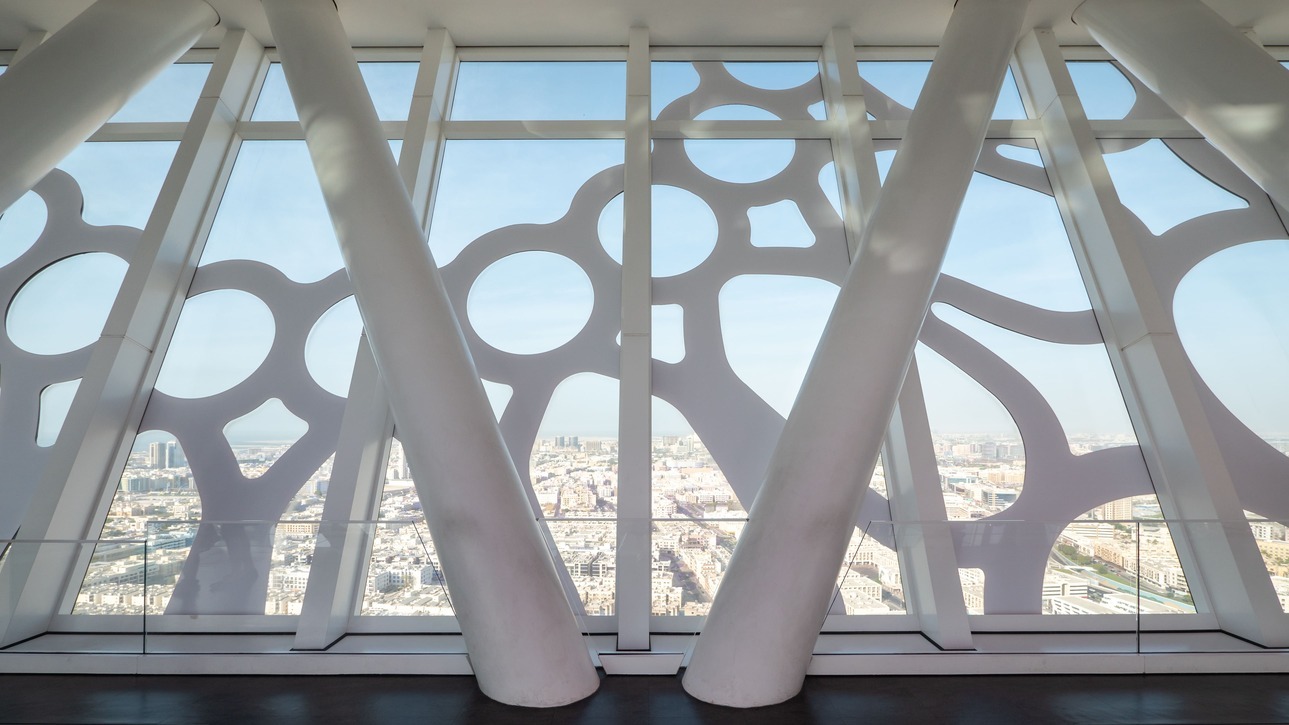
Architecturally, the metaphor is clear and intentionally literal. Two vertical towers, equal in presence, joined by a single horizontal bridge at the top. Past and future connected by one line. It’s not subtle, and it doesn’t pretend to be. But that clarity is the point. Unlike many landmarks that rely on abstraction, the Frame communicates its idea instantly. You don’t need an explanation to understand what it’s doing.
Its placement reinforces that restraint. Rather than inserting itself into the densest part of the skyline, the Frame sits within Zabeel Park. The greenery creates physical and visual distance from the surrounding city, allowing the structure to breathe. That distance matters. It slows the experience down. You approach on foot, surrounded by trees and open space, before rising above the park and the city beyond it.
Inside, the journey is designed as a progression. Interactive galleries trace Dubai’s transformation, using visuals and storytelling to connect the city’s early years with its present-day identity, showing how one phase made the next possible. The experience builds toward the top, where the Frame’s most talked-about feature waits.
Its placement reinforces that restraint. Rather than inserting itself into the densest part of the skyline, the Frame sits within Zabeel Park. The greenery creates physical and visual distance from the surrounding city, allowing the structure to breathe. That distance matters. It slows the experience down. You approach on foot, surrounded by trees and open space, before rising above the park and the city beyond it.
Inside, the journey is designed as a progression. Interactive galleries trace Dubai’s transformation, using visuals and storytelling to connect the city’s early years with its present-day identity, showing how one phase made the next possible. The experience builds toward the top, where the Frame’s most talked-about feature waits.
The glass floor walkway is brief but memorable. A transparent strip suspended high above the ground, connecting the two sides of the structure. Standing on it, you’re physically positioned between two views, two eras, two versions of the city. The metaphor stops being conceptual and becomes something you feel in your body, even if only for a few steps.
Dubai Frame is consistently busy, attracting both residents and visitors. People return because the view changes. The city grows, skylines shift, and the Frame continues to hold the moment where those changes are most visible. It remains relevant precisely because it isn’t chasing novelty. As landmarks go, it’s a rare thing – an icon built not to be looked at endlessly, but to help you look better.
Dubai Frame is consistently busy, attracting both residents and visitors. People return because the view changes. The city grows, skylines shift, and the Frame continues to hold the moment where those changes are most visible. It remains relevant precisely because it isn’t chasing novelty. As landmarks go, it’s a rare thing – an icon built not to be looked at endlessly, but to help you look better.