

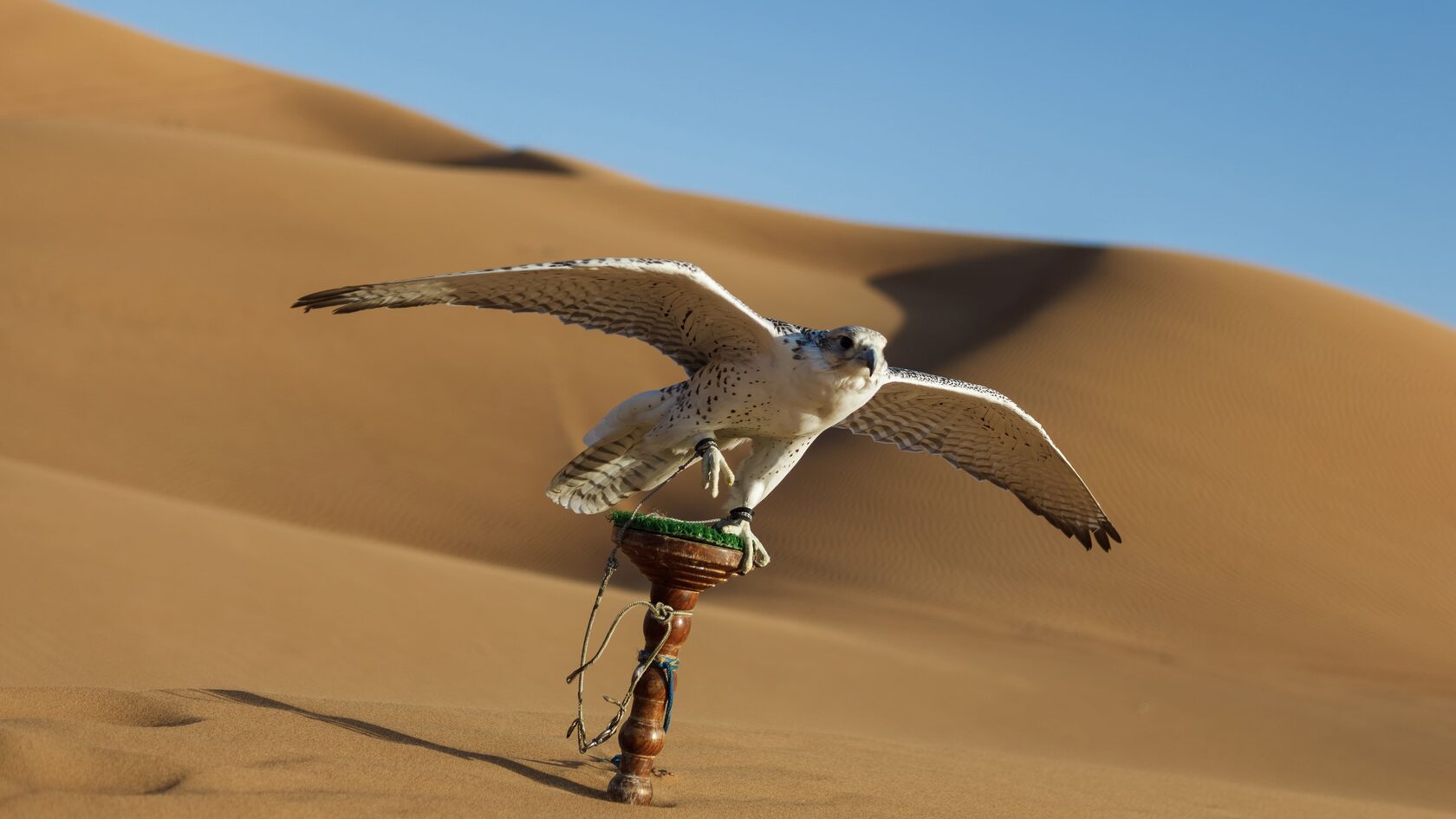
Falconry in the UAE sits somewhere between heritage, sport, and a very specific kind of weekend routine. You’ll hear it mentioned casually, the same way people talk about horses or boats. Someone went flying at dawn. Someone’s bird molted early. Someone disappeared into the desert for a day and came back sunburned and calm. It’s one of those old practices that never really left.
Before cities, oil, or air-conditioning, falcons were tools for survival. They hunted houbara and other game when food options were limited, and they rewarded patience and skill rather than strength. That logic still shapes how falconry is treated today. You wake up early. You drive out. You wait. If nothing happens, that’s fine too.
The seasonality matters. Falconry here is tied to winter in the same way golf or long desert drives are. From roughly October to March, the weather finally allows long hours outdoors without fighting heat or dust storms. Early mornings are cool, afternoons are gentle, and the desert feels usable. Falconers time their routines around this window, training birds carefully before the season and easing off once temperatures climb again.
Before cities, oil, or air-conditioning, falcons were tools for survival. They hunted houbara and other game when food options were limited, and they rewarded patience and skill rather than strength. That logic still shapes how falconry is treated today. You wake up early. You drive out. You wait. If nothing happens, that’s fine too.
The seasonality matters. Falconry here is tied to winter in the same way golf or long desert drives are. From roughly October to March, the weather finally allows long hours outdoors without fighting heat or dust storms. Early mornings are cool, afternoons are gentle, and the desert feels usable. Falconers time their routines around this window, training birds carefully before the season and easing off once temperatures climb again.
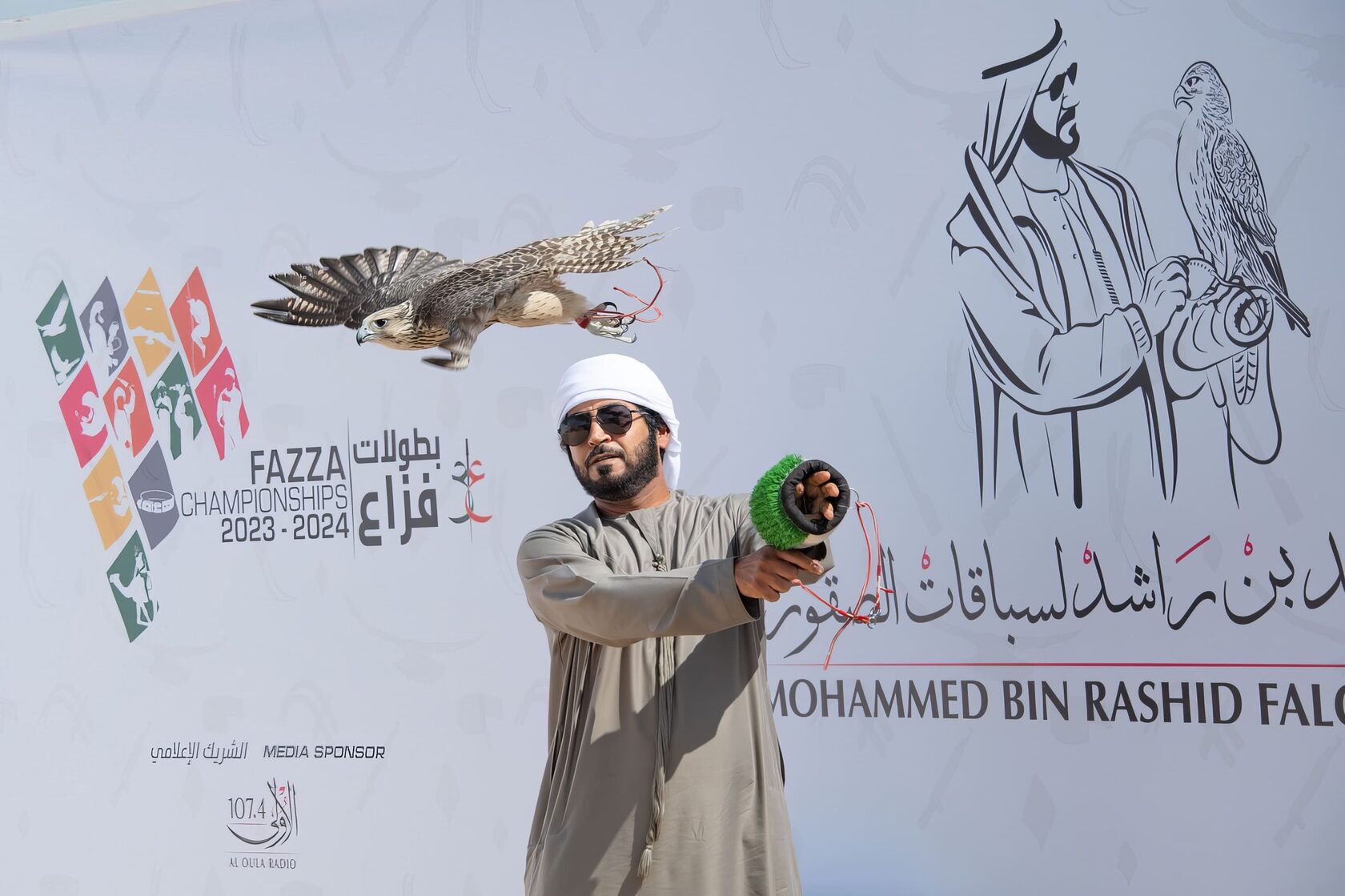
What often surprises newcomers is how structured modern falconry has become. The UAE regulates falcon ownership, breeding, travel, and healthcare tightly. Birds have passports. They are microchipped. They receive routine check-ups, often at places like Abu Dhabi Falcon Hospital, or other highly specialised veterinary centers.
The social side is quieter than people expect. Most sessions are small – a few vehicles, a few birds, long stretches of silence. Conversation happens, but it’s unforced. You talk while waiting, not because you scheduled a meeting. That’s part of why it still holds value in a place like the UAE, where networks form quickly but depth takes time. Time in the desert does that work for you.
There’s also a clear line between real falconry and its polished public version. Shows and festivals exist, and they serve a purpose, but they’re not where the culture lives day to day. Real falconry is repetitive. Training flights look almost boring from the outside. A good day might involve very little action. Skill is measured by restraint, by knowing when not to fly a bird, by reading conditions properly.
The social side is quieter than people expect. Most sessions are small – a few vehicles, a few birds, long stretches of silence. Conversation happens, but it’s unforced. You talk while waiting, not because you scheduled a meeting. That’s part of why it still holds value in a place like the UAE, where networks form quickly but depth takes time. Time in the desert does that work for you.
There’s also a clear line between real falconry and its polished public version. Shows and festivals exist, and they serve a purpose, but they’re not where the culture lives day to day. Real falconry is repetitive. Training flights look almost boring from the outside. A good day might involve very little action. Skill is measured by restraint, by knowing when not to fly a bird, by reading conditions properly.
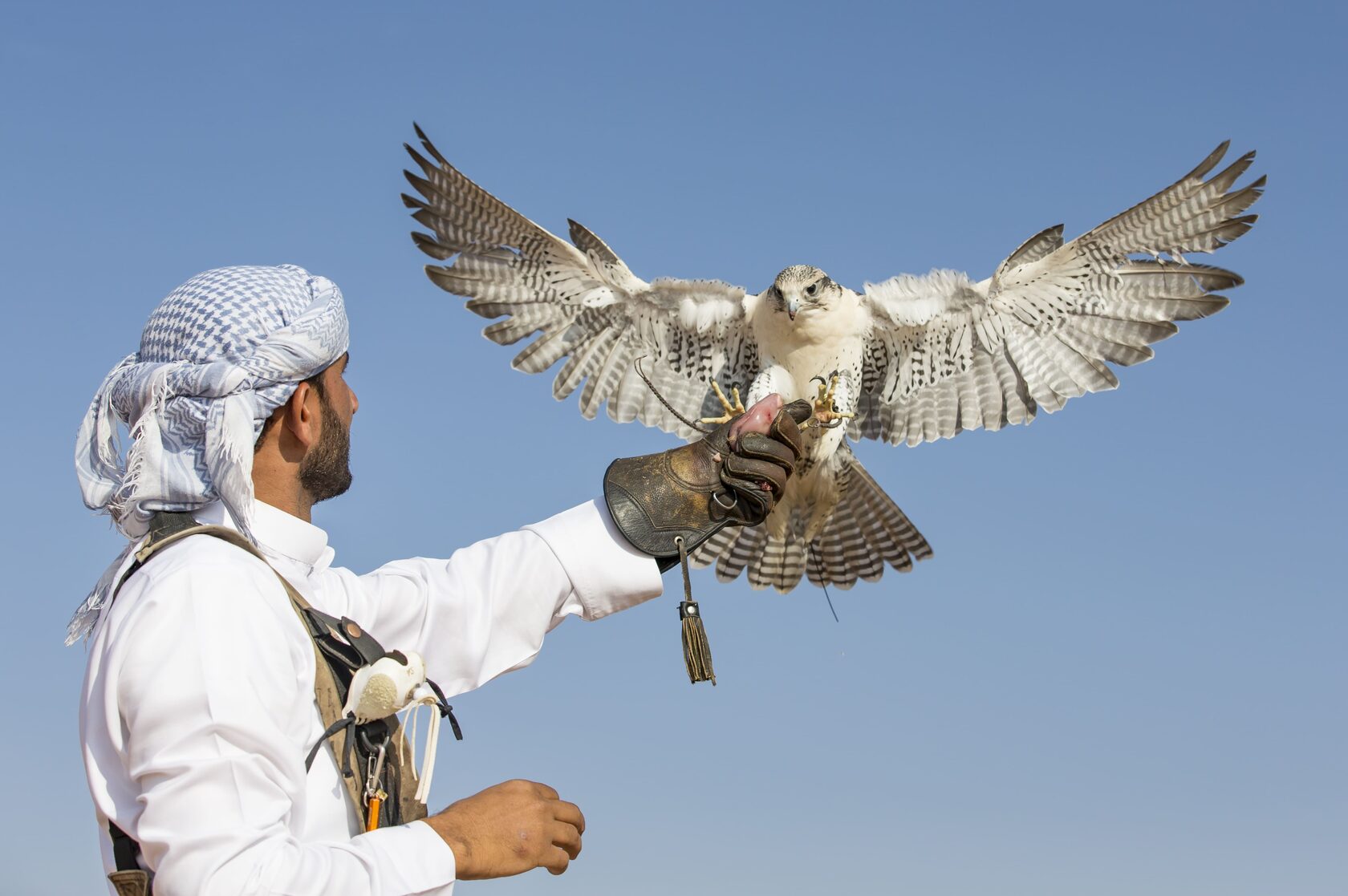
Numbers are hard to pin down precisely, but the scale is significant. Thousands of licensed falconers operate across the UAE, and breeding programmes in the region are among the most advanced in the world. Conservation also plays a real role. Hunting is controlled, seasons are defined, and captive-bred birds are now the norm. This is one of the reasons falconry was recognised by UNESCO as an intangible cultural heritage – it adapted without losing its core discipline.
What falconry offers, quietly, is a counterweight to modern UAE life. It slows time without pretending to reject progress. You still drive a powerful car to get there. You still track weather on your phone. But once the bird is on your glove, the logic changes. You wait. You observe. You accept that not everything performs on demand.
What falconry offers, quietly, is a counterweight to modern UAE life. It slows time without pretending to reject progress. You still drive a powerful car to get there. You still track weather on your phone. But once the bird is on your glove, the logic changes. You wait. You observe. You accept that not everything performs on demand.