
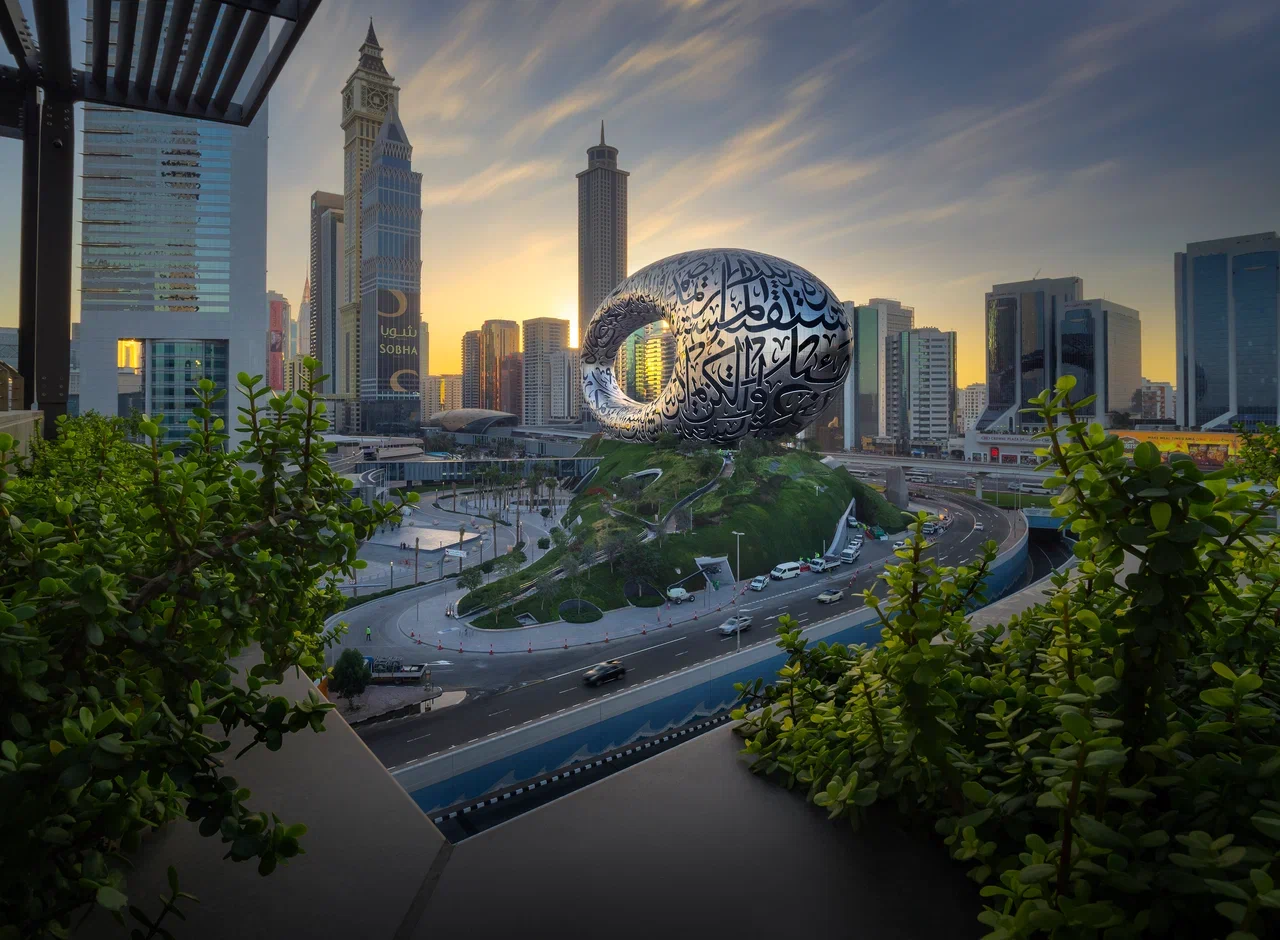
Dubai has never been a city for the uncertain. Most landmarks are statements – the tallest in the world, 7% returns, handover in 2026 – built to prove nothing is left to chance. But on the city’s busiest highway, surrounded by glass towers and measured ambition, one building does something unfamiliar: it leaves a space open.
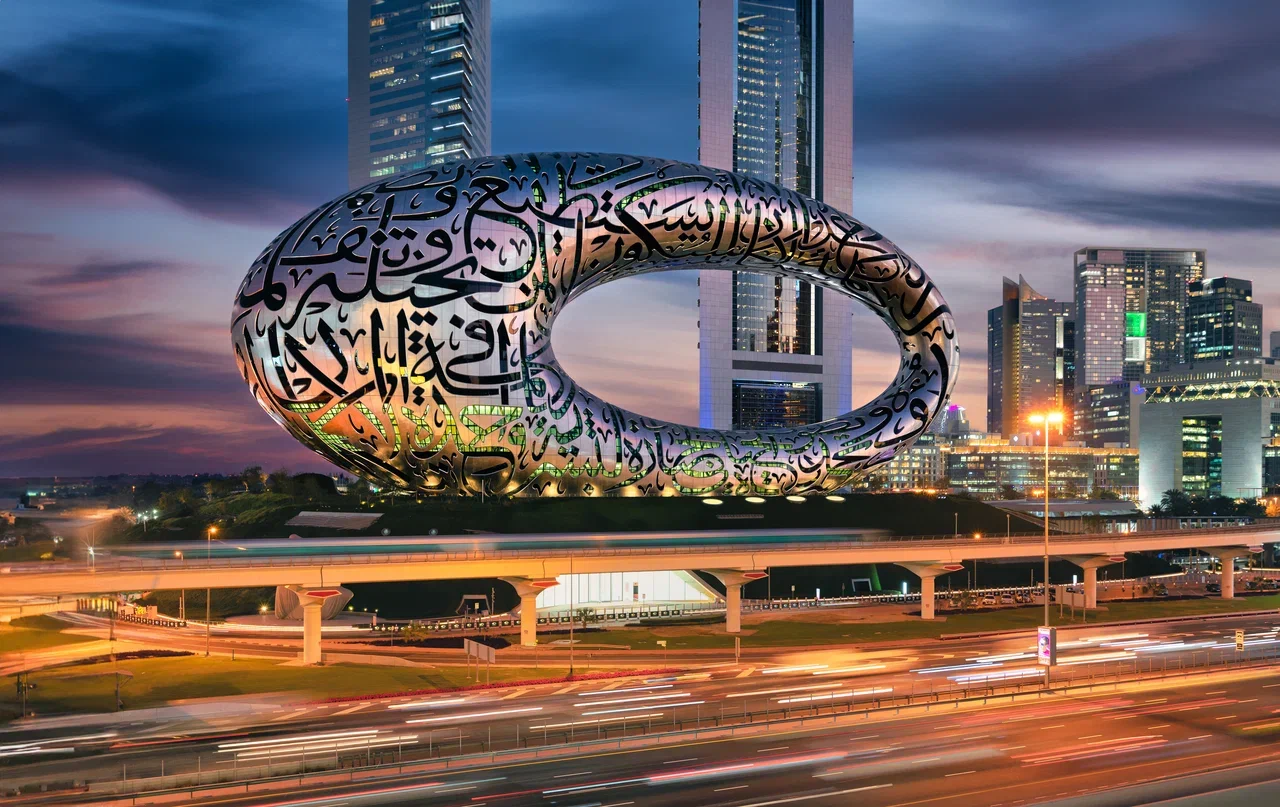
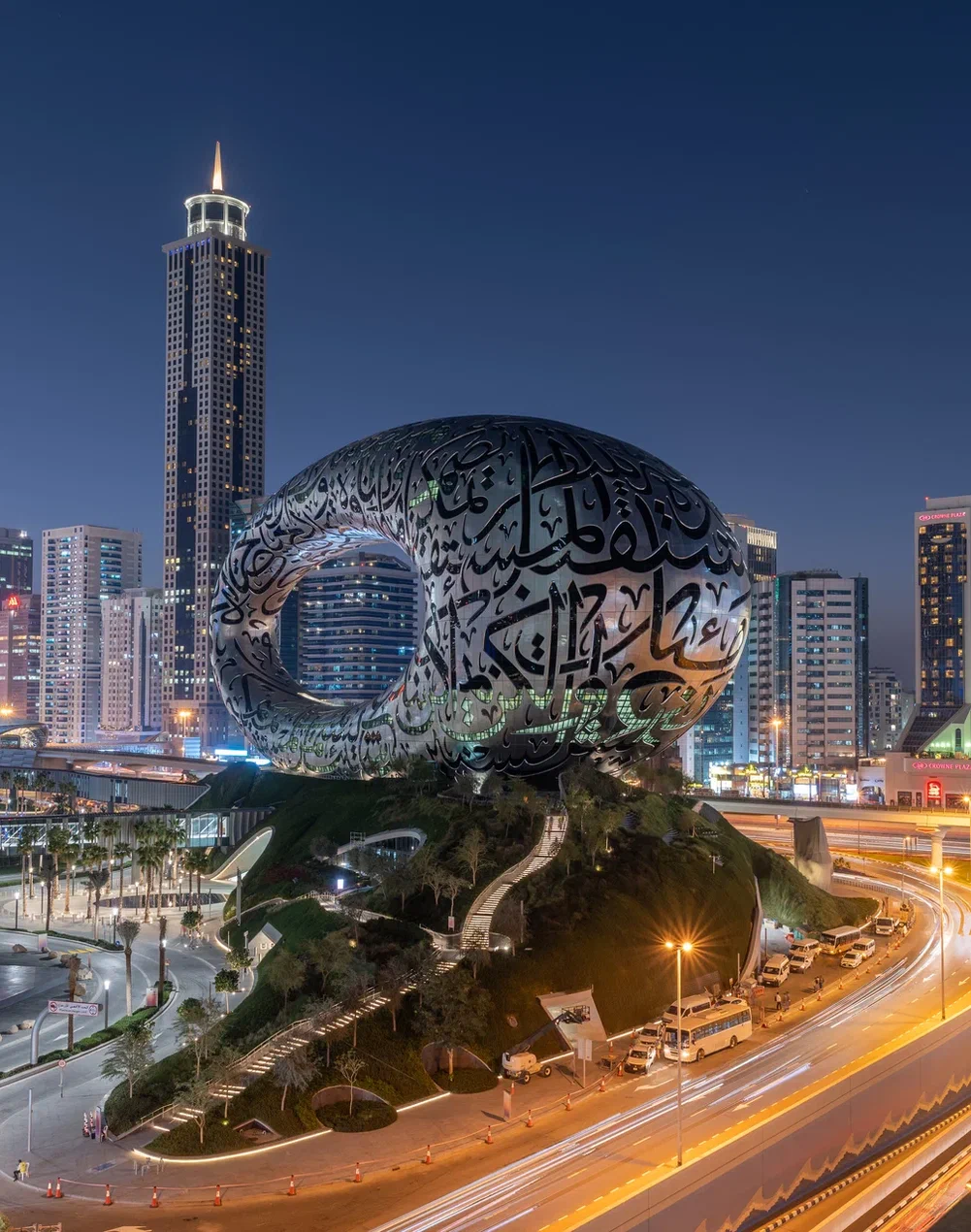
The Museum of the Future makes people look up, even if they pass it daily. It’s a 77-metre ring – hollow, no columns, no sharp corners. Each of the 1,024 panels is unique, shaped by robots you’d expect in an aerospace lab, not a construction site. Beneath it all, a diagrid of 3,600 steel nodes holds up more than 9,000 square metres of uninterrupted space – roughly three football pitches, open end to end.
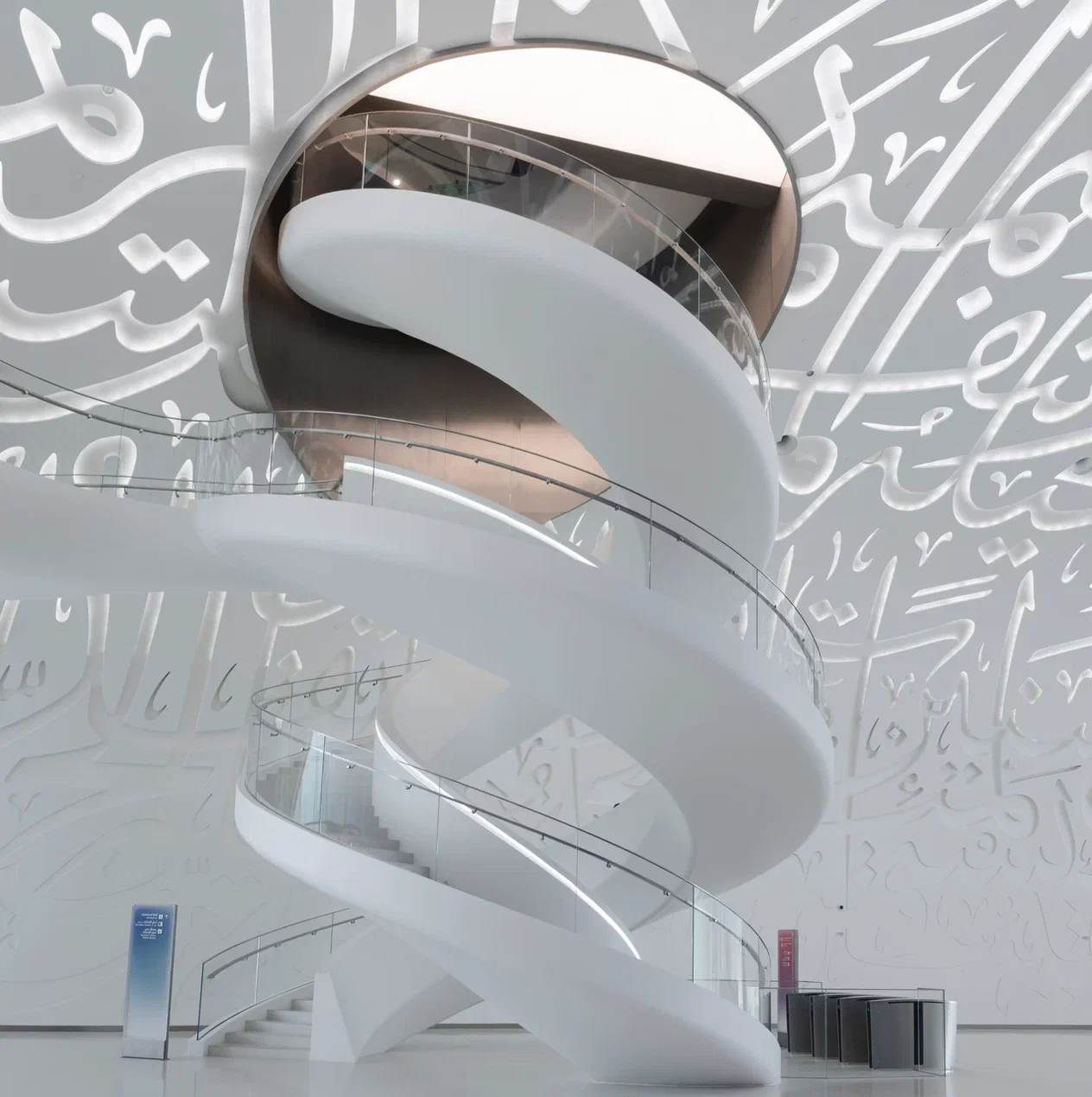
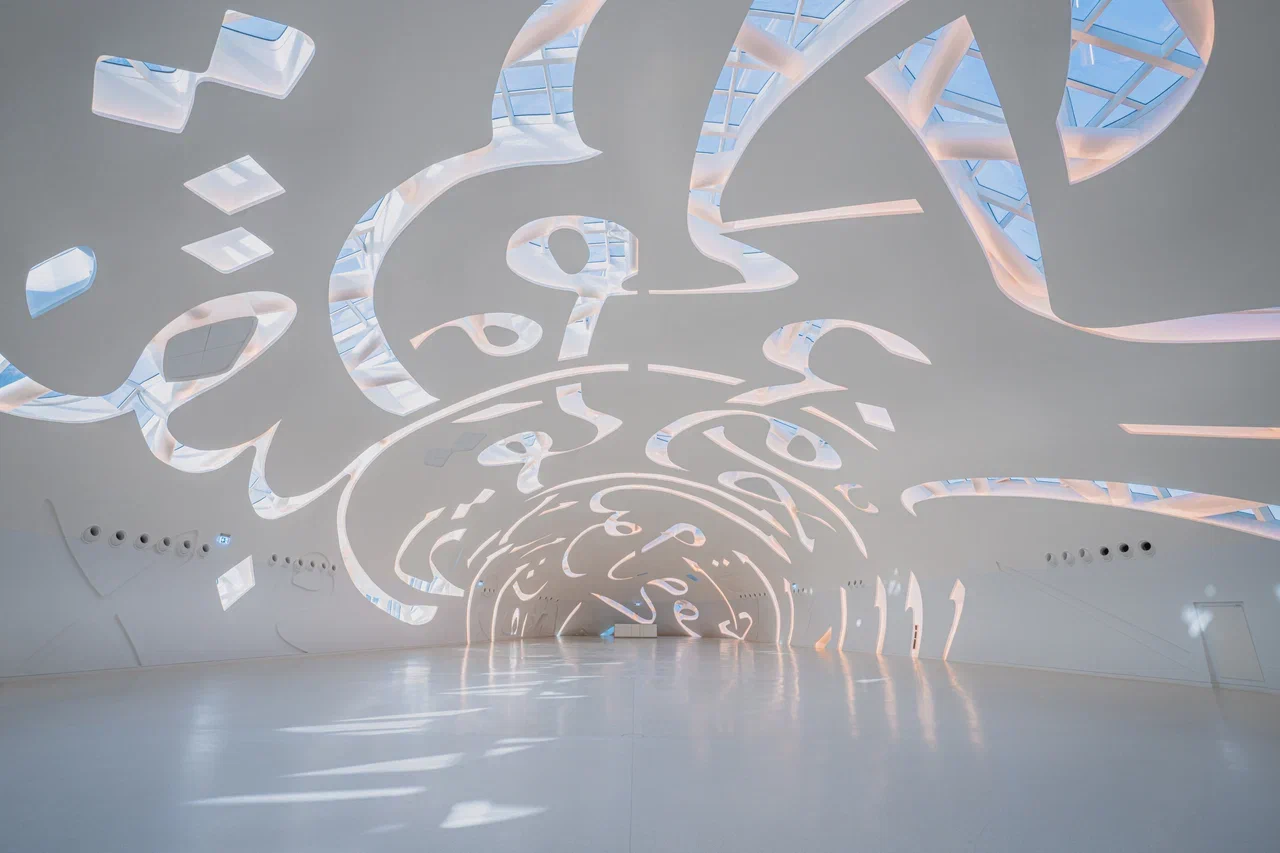
Step closer and the building begins to decode itself. Calligraphy, cut straight through the steel, runs in loops around the skin – Sheikh Mohammed’s promise: ‘The future belongs to those who can imagine it, design it, and execute it.’ The ring stands for knowledge. Its green base is earth. At the centre: emptiness – a deliberate pace left for questions. Even the opening date – 22.02.2022 – was chosen as a palindrome, echoing the idea that the future keeps coming round again.
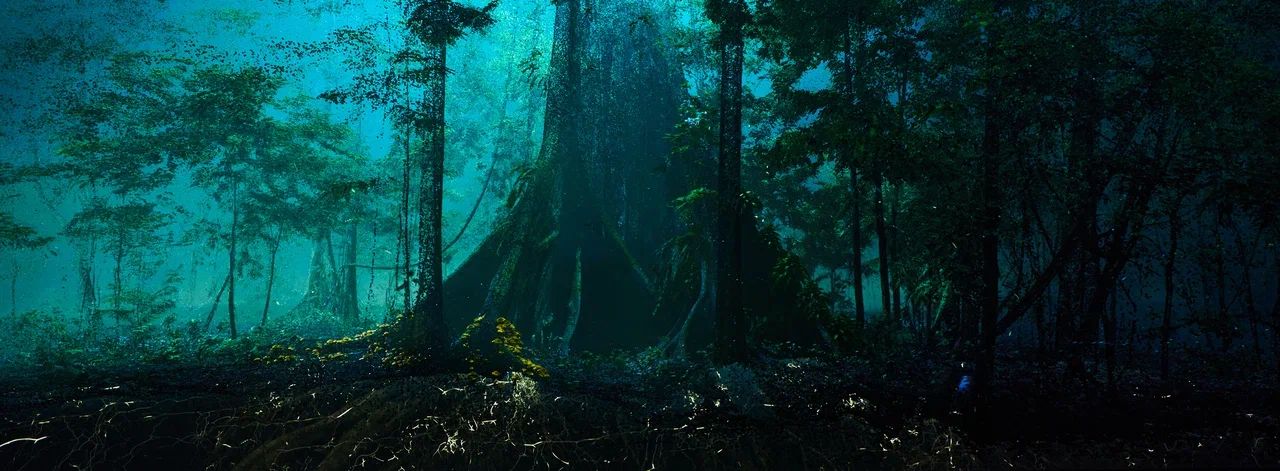
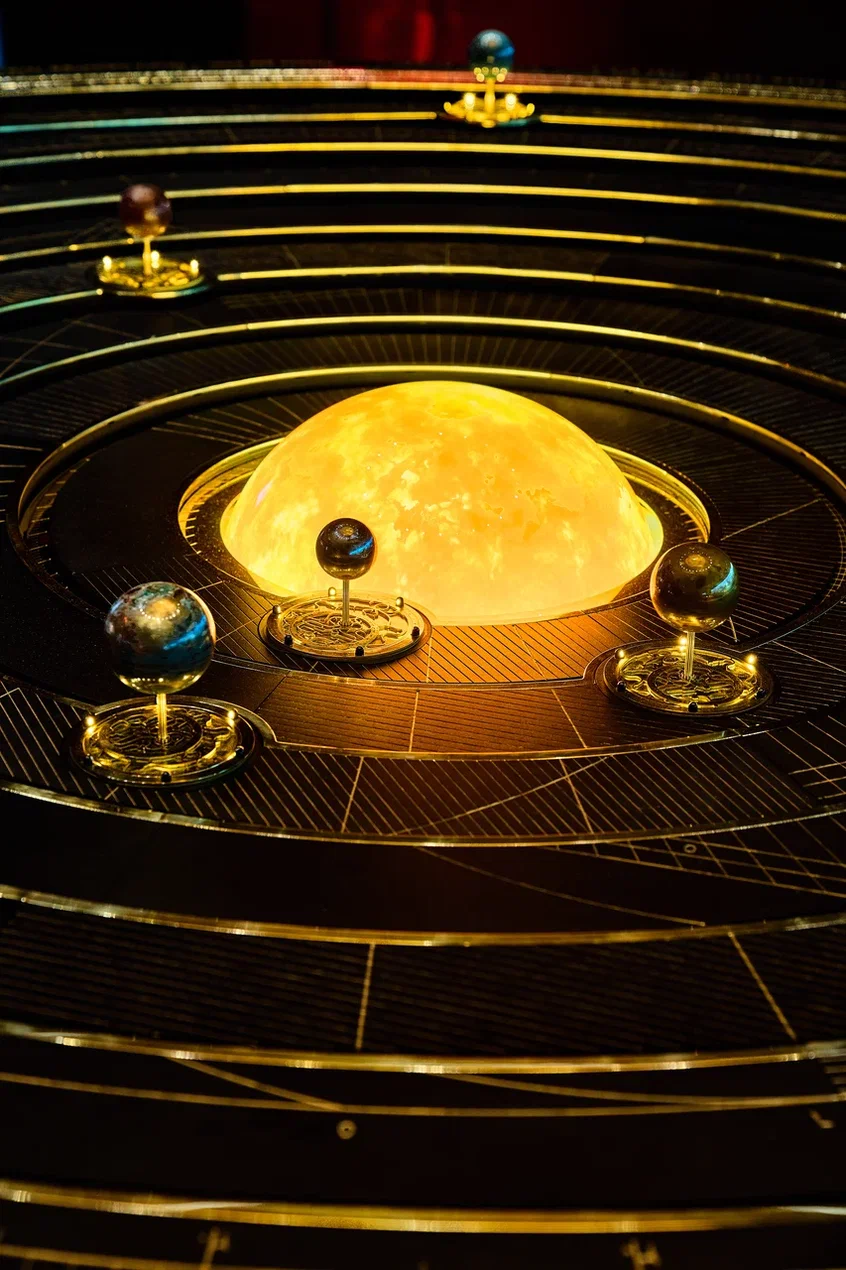
Inside, spectacle gives way to quiet. One floor imagines life aboard an orbital station in 2071 – zero-gravity gardens, a view of Earth that feels almost fragile. Another floor, the rainforest, is lush and luminous until you notice how much of it already feels extinct – mist beading on metal, a recorded bird call pausing mid-phrase. A mirrored DNA archive glows with softly lit vials, each holding the genetic code of a species you might never see again.
Al Waha calls itself a digital detox but lands somewhere between a spa and a waiting room. The lights are low, the air faintly floral, and the walls shift from rough plaster to padded alcoves. Stations offer guided breathing, sound baths, or quiet reflection. A handful of visitors press their palms to the wall, close their eyes for a moment, then move on.
Tomorrow Today is the gallery where the future feels almost close enough to touch. You might pass a water bottle made from seaweed, or see a taxi that’s already learned its way around Dubai with no one at the wheel. One wall glows with solar panels designed for city pavements – a quiet nod to Masdar City’s energy labs – while, across the room, lab-grown burgers and vertical farms promise new ways to eat in a desert. AI-powered medical kits, once tested in Expo 2020’s field clinics, sit beside a tray of edible cutlery that tastes faintly of nothing at all.
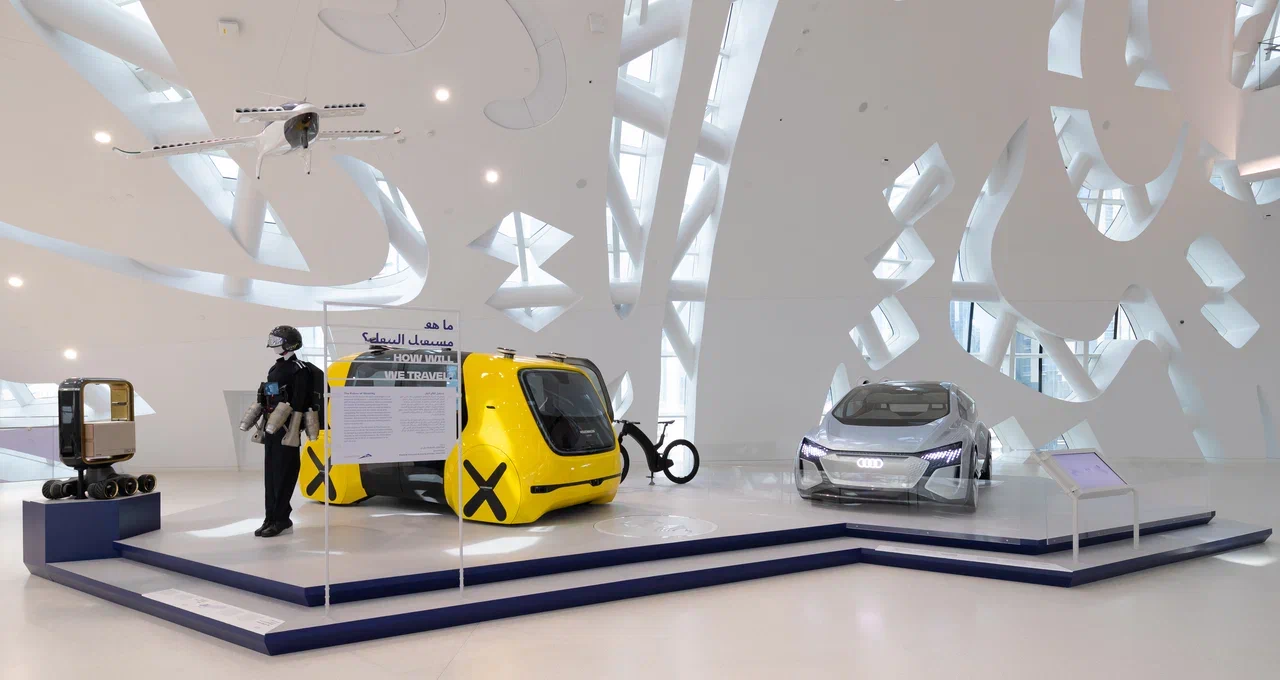
But the line-up is always shifting: a device from MIT Media Lab one month, a local hydroponic system the next. Nothing here is meant to last, and every prototype is a question about what might catch on outside these walls. Some launches draw a crowd, others just a curious pause and a wry smile before people move on – wondering which version of the future is actually waiting for them.
On the first floor, Future Heroes is a playground for building tomorrow. Children run between climbing frames, puzzles, and roleplay games. No iPads, no explainer videos—just hands-on invention and noise. Every detail is made for the real audience of the future: the children who will live in it. Parents linger nearby, watching as cities rise and topple in their children’s hands, wondering if the world outside these walls will give them the same chance.
For a museum so invested in mindfulness, anything less than real sustainability would feel hollow. Here, it’s built in.
This is Dubai’s first building to earn LEED Platinum – the highest green rating in the world, still rare in the Gulf. Passive solar shading, careful orientation, and those script-shaped windows keep energy use down and air moving. Solar panels on the roof help power the exhibits and Future Heroes lab. Rainwater is collected, filtered, and used for more than 7,000 native trees and shrubs. The building uses about half as much water and energy as others its size.
Sometimes, the museum stays open late for Future Nights – talks, art, and stargazing from the Dark Sky lab under the ring. The building becomes a beacon. In just two years, more than three million people from 177 countries have walked through – sometimes catching an astronaut, sometimes just standing on the grass, watching the glow against the city.
Most people arrive expecting answers – something dazzling, a glimpse of tomorrow that feels safe and inevitable. Instead, as the lights come on outside and the crowds thin, a few visitors linger on the grass or pause beneath the illuminated ring. The questions they carry home aren’t about flying cars. They’re smaller, and much harder to answer: What kind of future feels worth hoping for? And what would you let go of, if it meant a better world was possible?